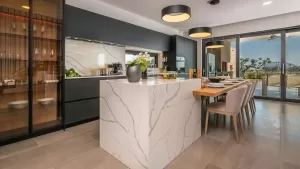



To choose white quartz kitchen worktops, compare the undertone, pattern and finish beside your actual cabinet doors. Then view the sample in daylight and under your kitchen lights. A white that looks neutral on a screen may appear warmer or cooler in the room.
Silestone, Compac and Caesarstone all appeared in our original shortlist. However, brand names alone do not decide the right shade. Use the steps below to narrow your options, then confirm current colours and specifications with the supplier.
1. Compare warm and cool whites together
First, place worktop samples beside your doors, wall paint and floor. A warm white may sit well with cream or timber, while a cooler shade can sharpen a grey scheme. However, there is no fixed rule that suits every room.
The archive included Silestone Miami White as a plain white reference. Check a current sample before using any named product in your plan.

2. Decide how much pattern you want
A plain surface creates a quiet background. In contrast, flecks or veins can add movement and become a focal point. Compare a large image or slab when the pattern is a key part of your design.
For example, the original article referenced Silestone Blanco Zeus alongside more patterned materials. Also, compare the care needs if you plan to mix quartz with natural marble.

3. Use finish and texture to add depth
A pale kitchen does not need every surface to look the same. For example, smooth doors can sit beside timber grain or textured tiles. Also, compare how polished and lower-sheen samples reflect light.
If you mix materials, check each one separately. A quartz top and a leathered granite surface can have different care needs. Ask the supplier how to maintain both.

4. Choose accent colours after the main finishes
Once the worktop, cabinets and floor work together, add smaller accents. Handles, seating and lighting can introduce colour without changing the whole room. Start with a small palette and expand it only if the scheme needs more contrast.
The archive featured Silestone Iconic White as a white reference. However, a product photograph should help form a shortlist rather than replace a sample comparison.

5. Review daylight across the room
Move the sample between the island, sink and darker wall runs. Then look at it at different times of day. This helps reveal whether the shade works throughout the kitchen.
Also, compare finish options for the exact colour. The original article used Compac Absolute Blanc as an example. Ask which versions are currently available.

6. Balance the stone with softer details
Timber, upholstered seating and a small number of accessories can make a white scheme feel more layered. However, choose details that suit the room’s use and cleaning needs. Keep preparation areas clear and practical.
A subtly patterned white such as the archived Compac Glaciar reference can support this quieter approach. Compare the real sample with your chosen fabrics and wood tones.

7. Plan worktop joints before fabrication
Ask the fabricator to show the proposed joints on your plan. Pattern direction, access, slab size and cut-outs can all affect their position. Therefore, discuss the layout before cutting begins.
Do not paint over a worktop joint or cover it with fabric. The fabricator should specify and finish the joint for the installed material. If an existing joint opens or moves, have it checked rather than hiding it.
Compac Alaska was one of the patterned examples in the original article. Even with a pattern, careful joint planning matters.

8. Compare the splashback at the same time
A matching splashback can create visual continuity. Alternatively, a quieter wall finish can balance a more active worktop pattern. Place both samples beside the cabinet door before making a final choice.
The original shortlist included Caesarstone Pure White. Confirm the current material and the proposed wall installation details with your supplier.

9. Look beyond a small sample
Fine flecks may seem almost invisible on a small piece yet become more noticeable across a long run. Likewise, veins can look very different at island scale. Therefore, ask how well the sample represents the full slab.
Also, review where the main pattern will fall around the sink and hob. A cutting layout helps you understand the final effect before fabrication starts.

10. Check the evening lighting
Finally, view the sample under the lamps you will use. Task lights, pendants and general lighting can change both colour and reflected glare. Test the design where you cook and prepare food, rather than only at the centre of the room.
Compac Luna appeared in the archive as a finely patterned reference. As with every older product example, confirm current supply and finish options.

Questions about white quartz kitchen worktops
Will every white quartz match white cabinets?
No. Undertones differ, and lighting can make that contrast more obvious. Compare samples together in the room.
Should I choose a brand before choosing the shade?
Build a shortlist around design, care and budget, then compare exact products. Also, ask for the current technical details and fitted scope.
Can a white worktop be practical for daily use?
Choose a suitable product and follow its care guidance. Use boards and trivets, wipe up spills and ask before treating a persistent mark.
Build your white quartz shortlist with MKW
Explore our quartz worktops and share your plan, cabinet colours and preferred pattern. MKW can help compare white quartz kitchen worktops and prepare a quote for the chosen surface and installation.