


Unistone or Silestone worktops can both provide durable, low-maintenance engineered surfaces. However, neither brand automatically suits every kitchen. Instead, the right choice depends on the preferred design, finish, slab dimensions, fabrication requirements, current warranty terms and complete installed quotation.
In practical terms, buyers should compare physical samples and project-specific quotes rather than choose on brand recognition alone. For example, Silestone may appeal to customers who want one of its current designs or coordinated surface options. Meanwhile, Unistone can offer a strong alternative when its colour, pattern or quoted project cost suits the brief.
At My Kitchen Worktop, the team recommends assessing the actual slab before approval, particularly with veined designs. This step helps the fabricator plan joints, cut-outs and pattern direction around the room. Moreover, it gives the customer a clearer impression of the full-scale pattern than a small sample can provide.

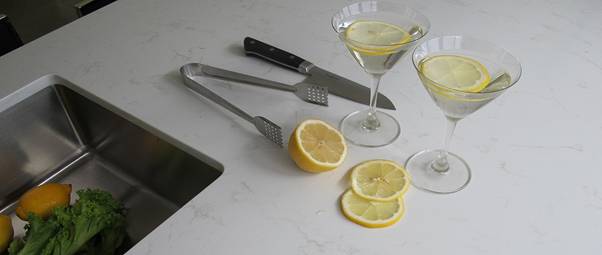
Unistone Bianco Carrara quartz used for a kitchen worktop.
Unistone or Silestone worktops at a glance
| Factor | Unistone | Silestone |
|---|---|---|
| Material category | Engineered quartz surface | Engineered mineral surface commonly compared with quartz |
| Design choice | Includes understated, aggregate and marble-inspired looks | Includes solid, concrete-inspired and veined designs |
| Everyday care | Usually simple to clean with mild products | Usually simple to clean with mild products |
| Heat protection | Use a trivet and avoid direct contact with hot cookware | Use a trivet and avoid direct contact with hot cookware |
| Price | Depends on design, slab use and fabrication | Depends on design, slab use and fabrication |
| Best buying method | Compare a current sample and installed quote | Compare a current sample and installed quote |
Product formulations and collections can change. Therefore, buyers should ask their supplier to confirm the current technical data, slab format, finish, care guidance and warranty for the exact design under consideration.
What is Unistone quartz?
Unistone is an engineered stone brand associated with Brachot. Historically, the original article described its slabs as containing approximately 93% quartz and using Breton technology. It also referred to production in Vietnam and UK distribution through Brachot. However, details can vary by collection and date, so current manufacturer documentation should take priority.
Earlier ranges included polished and textured options as well as standard and jumbo formats. Consequently, larger formats could reduce the number of joints on islands or long worktop runs. Nevertheless, a large slab does not guarantee a seamless installation because room access, cut-outs, structural support and safe handling also influence joint placement.
The source article also discussed Unistone Quartz alongside Unimarble within Brachot’s product portfolio. However, Unimarble belongs to a different composite material category. Therefore, buyers should not assume that the two materials share identical properties or care requirements.
What is Silestone?
Silestone is a Cosentino surface brand that entered the market in 1990. Historically, the original article described a large international distribution network and linked the brand with other Cosentino products, including granite worktops and Dekton. However, these products belong to separate material categories, so buyers should not treat them as technically interchangeable.
Older Silestone ranges often contained a high proportion of quartz. More recently, product development has introduced formulations that may use different mineral compositions. Consequently, buyers should consult the current specification for their chosen colour rather than apply one historic quartz percentage to the complete range.

Silestone Eternal Desert Silver worktops.
Silestone has historically offered polished and textured finishes, integrated sinks and other coordinated applications. However, availability changes over time. Therefore, a fabricator should confirm whether a design or finish shown in an older article or brochure remains available before templating begins.
Unistone vs Silestone for design and layout
Colour matters, but it should not form the only design consideration. Instead, buyers should also compare the scale of the pattern, background tone, surface texture and direction of the veining. For example, a dramatic vein may need careful positioning around a hob, sink or visible joint.
Slab dimensions matter too. The original comparison listed several thicknesses and standard or jumbo slab formats for both brands. However, customers should not use those historical measurements for a current order without confirmation. Even a small difference in usable slab size can determine whether a project requires one slab, two slabs or an additional joint.
For related planning advice, MKW’s guide to choosing positions for kitchen worktop joints explains why seams depend on more than appearance. In addition, edge profiles, upstands and splashbacks can alter the quantity of material that the fabricator needs.
How do the surfaces perform?
Durability and stain resistance
Both brands produce non-porous engineered surfaces intended to resist many everyday stains. Therefore, they generally require less routine maintenance than porous natural stone. Nevertheless, no worktop is indestructible. For instance, strong impacts can chip exposed edges, while abrasive cleaners can change the appearance of a finish.
Customers should wipe spills promptly, especially strongly coloured substances. In addition, they should avoid harsh solvents unless the current care instructions expressly approve them. The earlier article made broad antibacterial claims about Unistone; however, buyers should rely on current product-specific evidence and maintain normal kitchen hygiene.
Heat, scratches and sunlight
Always place hot pans, oven trays and heated appliances on a suitable trivet. Otherwise, concentrated heat may expose resin-containing surfaces to thermal shock or discolouration. Similarly, a chopping board protects both the worktop and knife blades.
Engineered surfaces suit many indoor applications. However, prolonged ultraviolet exposure can affect some colours or binders. Therefore, buyers planning an outdoor kitchen or strongly sunlit installation should confirm that the selected product suits that location.
For a broader introduction, readers can also consult MKW’s guide to quartz worktops. In particular, that guide explains the general characteristics that buyers should assess before selecting a brand or colour.
Installation considerations for Unistone or Silestone worktops
Fabrication quality often matters as much as the brand. For this reason, accurate templating, appropriate support and carefully finished cut-outs help protect the completed surface. Meanwhile, the installer must assess cabinet levels, overhangs, appliance clearances and access into the property.
The source article listed 12 mm, 20 mm and 30 mm products and compared specific slab dimensions. It also described quartz worktops and coordinated Silestone worktops applications such as sinks and washbasins. However, formats and accessory ranges evolve. Therefore, every quotation should identify the exact thickness, finish and proposed slab allocation.
Before ordering, MKW staff can review plans, discuss likely joint positions and prepare a project-specific quotation. In addition, customers can provide dimensions, a simple sketch and the preferred design to make the initial estimate more useful.
Which brand costs more in the UK?
There is no reliable universal price winner. Instead, the installed cost depends on the selected colour or collection, number of slabs, material yield, edge detail, cut-outs, drainage grooves, access and installation area. Moreover, promotions and stock arrangements can change the comparison.
The 2018 article suggested that Unistone could offer value on some larger projects, while transport could influence smaller orders. It also contrasted the brands’ UK distribution arrangements. However, those observations reflected market conditions at the time and should not serve as current pricing rules.
For a fair comparison, customers should request like-for-like quotations based on the same drawing and specification. Each quote should include templating, fabrication, delivery, installation, cut-outs and any necessary supports. Consequently, the customer can compare the complete project cost rather than an incomplete material rate.
Warranty and aftercare
The original article referred to a 25-year Silestone warranty, registration within 30 days and estimated claim times for both brands. However, warranty periods, eligibility rules and response times may have changed. As a result, customers should obtain the current written terms before purchase and retain their invoice and installation records.
If a concern appears, the customer should contact the supplying fabricator first. The fabricator can then assess whether installation, use or a possible manufacturing defect caused the issue. Where appropriate, the fabricator can involve the distributor or manufacturer and provide the supporting project information.
So, which should a homeowner choose?
Customers should choose Unistone or Silestone worktops according to the exact design and project rather than rely on a blanket quality claim. After all, both can provide an attractive and practical kitchen surface when a skilled fabricator specifies and installs the material correctly.
Unistone may offer the better fit when its pattern, finish or complete quotation wins the comparison. Conversely, Silestone may suit a customer who prefers one of its current designs or coordinated surface options. In either case, the customer should inspect a recent sample and compare written specifications.
To narrow the choice, customers can request quotes for two or three named colours. MKW staff can then explain differences in slab use, joints and fabrication before the customer commits. Ultimately, this project-specific comparison provides a more reliable answer than brand reputation alone.
Frequently asked questions
Do Unistone and Silestone need sealing?
Engineered quartz surfaces generally do not require routine sealing. However, owners should follow the current care instructions supplied with the exact product.
Can hot pans go directly onto either surface?
No. Instead, customers should use a suitable trivet to protect the surface from concentrated heat and thermal shock, regardless of which brand they select.
Can a jumbo slab guarantee a joint-free island?
No. Although slab size helps, access, safe handling, pattern position, cut-outs and fabrication limits can still make a joint necessary.
Should customers view samples before ordering?
Yes. Screens and printed brochures cannot reproduce colour, gloss or texture precisely. Moreover, veined and aggregate designs can vary across a full slab.
What should a like-for-like quote include?
A useful quote should cover the specified material, thickness, templating, fabrication, cut-outs, delivery and installation. In addition, it should identify optional details such as upstands, drainage grooves and special edge profiles.
Originally published by Jesus Alberto Mouzo on 6 July 2018. Substantially updated for clarity and current buying guidance.