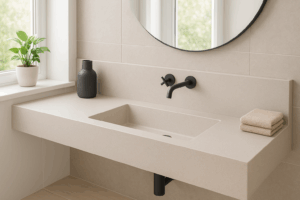



Stone bathroom coverings can create durable floors, vanity tops and wall panels. However, the right choice depends on where the surface will sit. For example, a shower wall has different requirements from a wet floor, while natural marble needs different care from quartz or sintered stone.
This article first appeared as a list of popular materials in 2018. Therefore, references to launches, awards and popularity provide historical context rather than current availability guidance. Before ordering, clients should check the latest technical data, finish, slab format and care instructions with the supplier.
How to choose stone bathroom coverings
First, consider the intended application rather than colour alone. In particular, a suitable bathroom specification should address the following points:
- Water exposure: check whether the material, finish, adhesive and grout suit the intended wet area.
- Slip resistance: polished stone can become slippery when wet. Therefore, select a floor finish using documented test information and professional advice.
- Stain and chemical resistance: cosmetics, soaps and acidic cleaners can affect some surfaces.
- Maintenance: natural marble may need sealing, whereas manufactured surfaces can require a different care regime.
- Installation: large panels need accurate templating, suitable substrates and careful handling.
Additionally, samples help because bathroom lighting can change the appearance of white, grey and gold veining. Moreover, natural slabs vary, so viewing the actual stone before fabrication may prevent unwelcome surprises.
Natural marble and marble-effect bathroom surfaces
1. Bianco Carrara marble
Bianco Carrara marble offers a pale background with soft grey veining. Consequently, its visual movement can suit floors, walls, vanity tops and other interior details. However, acidic products can etch marble, so owners need a suitable cleaning and maintenance routine.
Historically, Carrara marble has played an important role in architecture and sculpture. For instance, Michelangelo carved David from Carrara marble between 1501 and 1504. The stone also appears in memorial architecture associated with Edward VII in Birmingham. Therefore, this heritage explains much of its enduring appeal.

2. Compac Unique Calacatta
The original 2018 selection described this engineered quartz as a white surface with grey and gold-toned veining. Accordingly, Compac Unique Calacatta provided a marble-inspired alternative for interior vanity tops and selected cladding applications.
Because quartz surfaces contain resin, installers should follow current manufacturer guidance on wet areas, heat and cleaning products. In addition, buyers should confirm whether the chosen slab and finish suit floors or shower enclosures rather than assuming that worktop performance applies to every use.

3. Dekton Entzo
The Calacatta-inspired Dekton design called Entzo combined a white ground with grey and gold-toned details. As a sintered surface, the original article presented it for varied interior and exterior uses. Nevertheless, the exact specification, finish and installation system must match the bathroom location.
<
At this point, the original article repeated its opening list. Therefore, the revised guide retains the associated media but avoids duplicating the recommendations.
Bianco Carrara marble remains a reference point for many marble-effect surfaces. Although its natural variation adds character, clients should consider slab selection and sealing requirements carefully.
By comparison, Compac Unique Calacatta shows how engineered quartz can reproduce broad veining with more visual consistency than natural stone.

Likewise, Dekton Entzo offered a marble-led look without using a quarried marble slab.

Engineered stone bathroom coverings
4. Compac Ice Zement
Compac Ice Zement appeared in the original list as an understated off-white to grey quartz surface. Its restrained colour could complement timber, dark cabinetry or brighter accessories. Therefore, it suited schemes where the surface needed to support rather than dominate the room.

5. Caesarstone Statuario Maximus
Caesarstone Statuario Maximus drew on white marble with grey veining and warmer details. Consequently, Caesarstone Statuario Maximus could create a coordinated vanity top and upstand, subject to current fabrication and application guidance.

6. Unistone Calacatta Toscane
Unistone quartz surfaces appeared in the list through Unistone Calacatta Toscane Velluto. In particular, its pearly background and Calacatta-inspired pattern offered a controlled alternative to highly variable natural marble.

Sintered stone coverings for bathrooms
7. Neolith Calacatta
Neolith Calacatta was already well known when the original article appeared. Additionally, the 2018 copy referred readers to My Kitchen Worktop in London, UK and mentioned historical design recognition for the collection.
Neolith can support visual continuity across vanity tops and wall cladding when fabricators select suitable thicknesses, edge details and fixing systems. However, a qualified professional should assess cut-outs, joints and substrate preparation.

The Neolith Calacatta design features distributed grey veining over a bright background, with warmer details in the pattern. As a result, its relatively consistent design can simplify panel planning.
8. Compac Absolute Blanc in Glace finish
Compac Absolute Blanc offered a plain white alternative to the strongly veined materials in this guide. Meanwhile, the Glace finish provided a softer, matt appearance than a polished surface. Even so, a finish name does not prove suitability for wet flooring, so clients should request current slip-test information where relevant.

9. Neolith Carrara
Neolith Carrara took inspiration from Bianco Carrara marble stone. While its fine grey pattern suited understated bathrooms, bookmatched layouts could create a more decorative wall. Therefore, fabricators should plan veins, joints and openings before cutting the panels.

More natural marble bathroom finishes
-
Carrara marble
This entry overlaps with Bianco Carrara, yet it remains because the original list treated the names separately. A Carrara Marble worktop or vanity top brings natural variation and a subtle crystalline appearance. However, marble can scratch and etch, so owners should not treat it as maintenance-free.

For further historical care context, the original article referenced 7 Easy tips to take care of Carrara Marble Kitchen Worktops.
11. Statuario marble
Statuario marble comes from northern Italy and usually displays a pale background with pronounced grey veining. Consequently, it can become a focal point on a vanity or feature wall. Because every slab differs, clients should approve both the slab and proposed cutting layout before fabrication.

12. Calacatta Oro marble
Calacatta Oro marble is valued for bold grey and gold-toned veins across a light background. Therefore, it can create a striking luxury bathroom. Nevertheless, natural variation, etching and ongoing care remain important considerations.

13. Neolith Estatuario
Neolith Estatuario interprets white Italian marble through a sintered surface with broad and fine veining. Notably, the original article described it as a UK bestseller in 2017 and expected further growth in 2018. However, readers should now treat that statement only as historical context.


Comparing the main material families
The later media in the original post repeated products four to seven. Therefore, the revised article preserves those assets below while using the accompanying text to clarify the material families.
Compac Ice Zement represents engineered quartz with a restrained, cement-like appearance.

Meanwhile, Caesarstone and Caesarstone Statuario Maximus represent marble-inspired quartz surfaces.
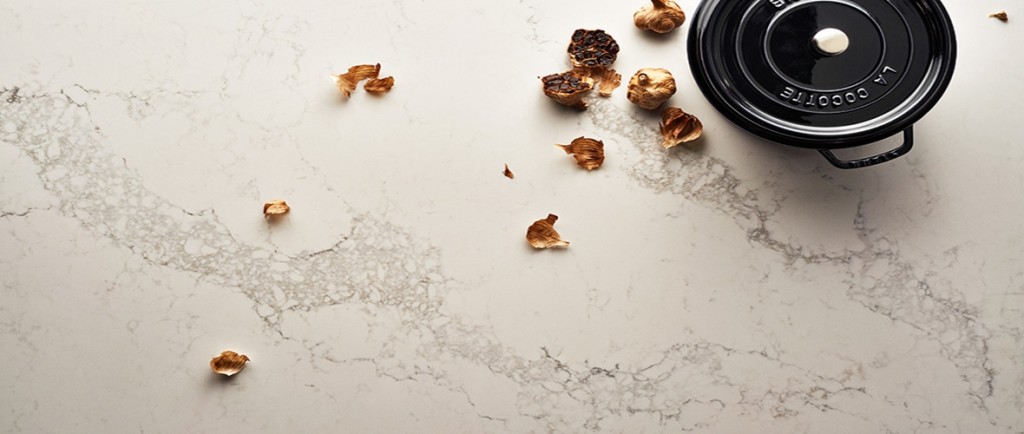
Similarly, Unistone quartz surfaces, including Unistone Calacatta Toscane Velluto, provide another engineered option.

Finally, Neolith appeared through suppliers such as My Kitchen Worktop in London, UK. The additional Neolith image concludes the retained gallery.

- Natural marble: each slab is unique and historically significant. However, acids can damage it, and appropriate sealing and care remain important.
- Engineered quartz: patterns are generally more consistent. Nevertheless, manufacturers may restrict certain wet, floor or exterior uses.
- Sintered stone: coordinated panels and tops can create a continuous scheme. Even so, professional fabrication and substrate preparation remain essential.
MKW staff can help clients compare samples and discuss fabrication for a bathroom vanity, upstand or suitable cladding project. Therefore, quotation requests should include drawings, dimensions and the intended application so the team can assess the brief accurately.
Care and installation of stone bathroom coverings
First, clean every surface with products approved for that material. In particular, avoid acidic limescale removers on marble and wipe spills promptly. Additionally, good ventilation reduces lingering moisture around joints, sealant and cabinetry.
For installation, the substrate must remain stable, level and suitable for the panel weight. Moreover, installers should plan movement joints, waterproofing and penetrations before fitting. Crucially, a stone surface does not replace the bathroom’s underlying tanking system.
Clients planning a coordinated vanity and upstand can also review MKW’s guide to worktop upstands and their practical purpose. Alternatively, the guide to choosing the right surface material supports broader material comparisons.
Stone bathroom coverings: frequently asked questions
Is marble suitable for a shower?
Marble can suit some shower installations when professionals specify the stone, finish, waterproofing, adhesive and maintenance regime correctly. However, acidic products can etch it, and the surface may require periodic sealing.
Which finish works best on a bathroom floor?
No single finish suits every project. Therefore, clients should request documented slip-resistance information for the chosen product and conditions, then seek advice from the project designer or installer.
Can quartz cover shower walls?
Suitability varies by manufacturer, product, backing and installation system. Consequently, clients should check current technical guidance before specifying quartz inside a shower enclosure.
Should clients view the actual natural-stone slab?
Yes, where possible, because viewing the slab reveals its colour, fissures and vein distribution. Moreover, the fabricator can discuss the cutting layout before production starts.
How can a client request an accurate quotation?
First, provide plans, approximate dimensions, material preferences, edge details, cut-outs and the project postcode. MKW staff can then discuss samples, site requirements and the next steps for a tailored quotation.