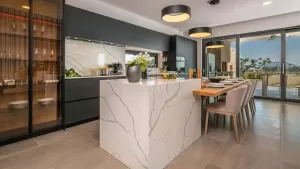



Silestone worktop finishes affect how a surface looks, feels and shows everyday marks. For example, polished surfaces reflect more light and emphasise colour, while matte or textured options create a softer appearance. Therefore, the right choice depends on the room, lighting, selected colour and level of visual maintenance that the household accepts.
Silestone can suit a kitchen or bathroom when the project specifies an appropriate product. However, buyers should not select a finish from an online photograph alone. Instead, they should compare physical samples under the lighting planned for the completed room.
Moreover, MKW can help clients assess Silestone colours and finishes alongside cabinetry, splashbacks and flooring before they request a quotation.

Silestone worktop finishes at a glance
For many projects, the main decision sits between a glossy polished surface and the softer touch of Suede. Meanwhile, earlier collections and articles also refer to Volcano and Raw. Since product ranges can change, clients should confirm which finish accompanies their selected colour before completing an order.
- Polished: glossy and reflective, with strong colour depth and a crisp appearance.
- Suede: a low-sheen, velvety texture that supports a softer contemporary look.
- Volcano: an earlier, more pronounced texture associated with rustic and industrial schemes.
- Raw: a name historically linked with industrial, concrete-inspired designs rather than a universal finish for every colour.
Importantly, colour, collection, slab format and market can all affect finish availability. Consequently, a preferred colour may narrow the choice of textures. Alternatively, a preferred texture may influence the final colour choice.
How the main Silestone surface finishes differ
Silestone Suede finish
Suede offers a matte, soft-touch appearance. As a result, it reduces glare and works particularly well with handleless cabinetry, timber details and calm neutral palettes. Moreover, its subdued sheen can prevent a large island from visually dominating the room.
However, the texture does not remove the need for routine cleaning. Grease, food residue and water marks may still show, especially on dark or plain colours. Even so, lower reflectivity can make some fingerprints less noticeable than they might look on a high-gloss surface.
Silestone surfaces commonly attract buyers because of their low porosity, and they do not need the periodic sealing that many natural stones require. Nevertheless, owners should follow the current care guidance for the exact product. In addition, MKW’s wider quartz information can help buyers understand the material category. For further background, readers can consult What is Silestone Suede?
Polished Silestone worktop finishes
A polished finish provides the highest sheen among the options in this guide. Therefore, it reflects daylight and artificial light around the room, which can help a compact or darker kitchen feel brighter. In addition, polishing tends to strengthen the visual depth of veining, mineral-style details and saturated colours.
However, reflections can highlight fingerprints, streaks and crumbs. In particular, this effect may become more noticeable on dark, uniform surfaces beneath direct spotlights. Therefore, a polished worktop suits households that value visual impact and do not mind wiping away visible marks regularly.
Some Silestone designs may also coordinate with sink solutions. However, compatibility depends on the current collection and project specification. Therefore, buyers should confirm the sink model, finish, dimensions and fabrication details instead of assuming that every colour supports the same arrangement.


Volcano finish: useful historical context
Earlier Silestone literature described Volcano as a deeper, tactile texture. Consequently, its rugged character suited industrial, urban and rustic interiors where designers wanted less shine and more visible surface relief.
However, a pronounced texture can require a different cleaning approach from a smooth worktop because residue may settle within the surface relief. Therefore, anyone considering older stock or matching an existing installation should inspect a sample and request the correct care instructions.
Earlier descriptions proposed Volcano for several applications, including floors, kitchens, bathrooms and wall panels. Today, the supplier and fabricator should confirm suitability for the specific slab and installation. Above all, the relevant Silestone worktops specification should take priority over historical promotional material.

Raw finish and concrete-inspired designs
Historically, Silestone linked Raw with the industrial character of the Loft collection and with designs inspired by concrete or cement. Therefore, it suited minimalist rooms with metal fittings, plain doors and restrained colour schemes. In addition, historical material indicates that the range reached the UK around the end of 2018.
However, that date provides context rather than evidence of current availability. Today, clients seeking the same aesthetic should compare current concrete-effect colours and verify the finish that accompanies each option. Furthermore, MKW’s guide to concrete-effect worktops for modern kitchens offers broader inspiration without assuming that a renamed or discontinued surface remains available.
How to choose a Silestone finish for a kitchen
Consider natural and artificial light
First, consider the room’s natural light and planned lighting scheme. Polished quartz can bounce light around the space, whereas Suede creates less glare and a calmer effect. However, direct spotlights may create distracting reflections on gloss. Therefore, the lighting plan matters as much as the cabinet colour.
Next, move a sample between bright and shaded parts of the room. This comparison matters because morning light, evening light and under-cabinet lighting can each change the apparent sheen. As a result, a finish that looks subtle in a showroom may appear much brighter at home.
Compare the finish with surrounding materials
Next, assess the design around the worktop. For example, a polished marble-effect surface can create a strong focal point. By contrast, a matte texture often complements timber, concrete effects and simple slab doors.
Likewise, floor finishes and splashbacks can affect the overall balance. A room with several glossy materials may benefit from a quieter worktop texture. Alternatively, a polished surface may add useful contrast to matte cabinetry. Those comparing patterns can also explore MKW’s guide to quartz worktop colours.
Test how the sample shows everyday marks
Finally, test everyday visibility before selecting a finish. For instance, place fingerprints and a few drops of clean water on a sample, then view it from typical standing positions. Afterwards, clean the sample with the recommended method and check for streaks.
This simple test often reveals more than a studio image. Moreover, it can help a household decide whether colour, pattern or sheen has the greatest effect on visible marks. For tailored advice, clients can send MKW their plans and selected cabinet details when requesting a quotation.
Care and practical limitations
For routine care, owners should remove spills promptly and wipe the worktop with a soft cloth, warm water and a suitable mild cleaner. Afterwards, they should rinse away any residue and dry the surface to limit streaking. In contrast, abrasive pads may alter the appearance, especially on darker or low-sheen finishes. Therefore, owners should avoid cleaning methods that the manufacturer has not approved.
Importantly, the finish does not make a worktop immune to damage. Owners should always use a chopping board instead of cutting directly on the surface. Likewise, they should use a trivet for hot cookware rather than placing pans straight from the hob or oven onto the worktop. For more detail, MKW’s article about hot pans on quartz worktops explains this precaution.
Furthermore, edges, joints and sink cut-outs influence the completed appearance. For example, a polished face next to a worked edge may catch light differently. Therefore, clients should discuss edge profiles, upstands, draining grooves and joint positions during templating instead of treating the finish as an isolated decision.

Which Silestone worktop finish is best?
There is no single best finish for every kitchen. Polished suits clients who want brightness, colour depth and a more reflective statement. By contrast, Suede suits those who prefer a restrained, tactile surface with less glare. Meanwhile, Raw and Volcano remain useful design references, although clients should confirm their present availability.
The selected colour can also change the result. For instance, a dark polished sample may show handling marks clearly, while an expressive pattern can disguise them. Similarly, a pale Suede design may feel warmer than a comparable colour in gloss. Therefore, comparing full-size displays or the largest available samples can support a more confident decision.
Ultimately, My Kitchen Worktop can review the intended application, colour, edge details and room lighting before preparing a project quotation. This approach helps the client select a finish that works with the complete kitchen rather than one that merely looks attractive in isolation.
Frequently asked questions
Is Suede or polished Silestone easier to keep looking clean?
Both finishes need regular wiping. However, polished surfaces may reveal streaks and fingerprints under direct light, while textured finishes require careful cleaning to remove residue. Ultimately, colour and pattern may affect mark visibility as much as sheen.
Do all Silestone colours come in every finish?
No. Instead, available finishes can vary between colours and collections. Therefore, clients should confirm the exact colour-and-finish combination before ordering or designing around a sample.
Does Silestone need sealing?
Silestone does not normally need the periodic sealing associated with porous natural stone. Nevertheless, owners should always follow the manufacturer’s current cleaning and care instructions for the specified product.
Should buyers choose a finish from an online image?
No. Screens, photography and lighting can change the apparent colour and sheen. Therefore, a physical sample viewed beside the cabinetry, flooring and splashback provides a more reliable impression.
Can clients still specify older Raw or Volcano surfaces?
Clients should not assume availability. Instead, the supplier should verify the current collection, finish name, slab details and suitable application before the client relies on an older reference.
Originally published by Jesus Alberto Mouzo on 15 January 2019; subsequently revised to provide current selection guidance.