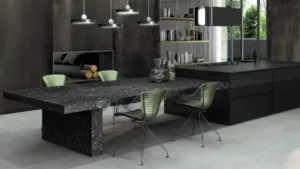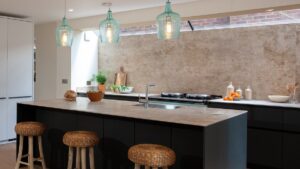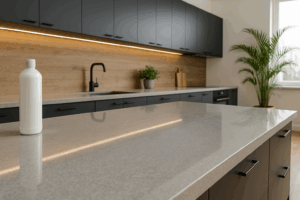



Choosing stone kitchen worktops starts with considering how the household will use the kitchen. For example, a busy family kitchen may prioritise stain resistance and straightforward care. In contrast, a design-led space may place natural pattern and distinctive character first.
No single surface suits every household. Therefore, buyers should compare appearance, maintenance, durability, edge details and installation requirements before selecting a slab. Ultimately, the best result balances daily practicality with the intended kitchen design.
Choosing stone kitchen worktops by material
The term “stone worktop” can cover natural stone, engineered quartz and modern ceramic or sintered surfaces. Although these materials can look similar, they do not behave in the same way. Consequently, understanding those differences helps prevent a choice based on colour alone.
Granite
Granite is a natural stone with individual mineral patterns, so every slab has its own character. As a result, it suits kitchens where durability and a natural appearance matter. However, porosity varies between stones and finishes, so owners should follow the fabricator’s sealing and care advice.
Because each slab differs, buyers should view the actual material rather than rely only on a small sample. In addition, those considering this option can read MKW’s guide to using granite worktops in kitchens.
Marble
Marble offers distinctive veining and develops character over time. However, acids such as lemon juice and vinegar can etch the surface, while spills may mark some varieties if left unattended. Therefore, marble best suits households that understand and accept natural wear.
The original article highlighted Kitchen Worktops Marble as an attractive choice. Although that remains a valid design option, appearance should not overshadow the material’s care requirements. For further context, buyers can read MKW’s article on reasons for choosing marble worktops.
Quartzite
Quartzite is a natural stone and should not be confused with engineered quartz. While it can offer dramatic movement and colour, its characteristics vary from one slab to another. As a result, buyers should confirm care, sealing and fabrication guidance for the specific stone under consideration.
Engineered quartz
Engineered quartz provides a more controlled pattern than most natural stone. Therefore, buyers commonly select it for consistent colours and relatively straightforward routine care. Nevertheless, owners should use trivets for hot cookware and follow the manufacturer’s instructions for cleaning and heat exposure.
For a more detailed overview, buyers can consult MKW’s guide to quartz worktops and their practical considerations.
Porcelain and sintered stone
Porcelain and sintered surfaces can provide stone, concrete or plain-colour effects. However, their properties, finishes and fabrication requirements vary by product. Therefore, buyers should check the specification carefully rather than assume that all large-format surfaces perform identically.
In addition, these materials may require specialist handling and edge fabrication. Consequently, an experienced fabricator should explain how the selected design will work around sinks, hobs and exposed edges.
Match the surface to everyday use
Before selecting kitchen stone, buyers should consider who cooks, how often the household entertains guests and whether spills tend to remain on the surface. For instance, a careful household may feel comfortable with marble. Meanwhile, a very active kitchen may benefit from a surface with simpler care requirements.
- For frequent cooking: prioritise easy cleaning, suitable heat precautions and a practical finish.
- For baking: consider the amount of uninterrupted preparation space and the position of joints.
- For entertaining: assess islands, breakfast bars and visible edge profiles from every angle.
- For rental or multigenerational homes: choose clear, manageable care requirements that all users can follow.
Although samples help with colour selection, they cannot always show the full movement of a natural slab. Therefore, slab viewing and layout planning are particularly valuable for strongly veined materials.
Maintenance when selecting stone worktops
Maintenance requirements depend on the exact material rather than the general label “stone”. For example, natural stones may need sealing, while engineered and ceramic surfaces have their own care instructions. In every case, owners should wipe spills promptly with products approved for that surface.
Moreover, buyers should not assume that one household cleaner suits every worktop. Abrasive pads, harsh chemicals and unsuitable acidic cleaners can affect certain finishes. In addition, placing hot pans on trivets and using chopping boards provides sensible protection for any premium surface.
Finish also influences daily care. Whereas highly polished materials can show fingerprints or reflections, textured finishes may need extra attention during cleaning. Therefore, buyers should handle a finish sample and ask how it behaves in normal use.
Colour, pattern and kitchen light
Colour should work with the room’s light, cabinetry, flooring and splashback rather than follow a rigid rule about kitchen size. For instance, pale surfaces can reflect more light, while dark worktops can create contrast and visual weight. However, either approach can succeed in a small or large room when the overall palette remains balanced.
Pattern scale matters too. For example, broad veining can become a focal point on an island, while a quieter design may suit a compact run with several cut-outs. In addition, natural variation means that joins and returns need careful planning when visual flow matters.
Because daylight and artificial lighting can alter undertones, buyers should view samples at different times of day. Furthermore, comparing the sample beside cabinet doors and flooring gives a more reliable impression than viewing it in isolation.
Choosing a stone worktop edge
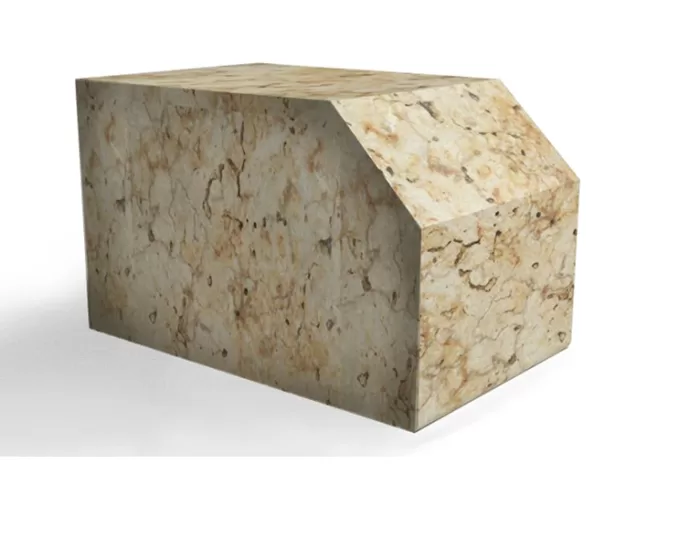
The edge profile changes both appearance and fabrication complexity. While simple eased or lightly bevelled edges suit many contemporary kitchens, bullnose and decorative profiles create a more traditional effect. However, the chosen profile must also suit the material, thickness and cabinet design.
The previous article described Chamfered Edge worktops alongside crescent, double ogee, demi-bullnose, eased, chiselled and decorative profiles. Although these remain useful design terms, not every edge suits every surface. Therefore, a fabricator should confirm feasibility before the order proceeds.
Rounded edges may feel less sharp in busy circulation areas. Nevertheless, no profile makes a kitchen childproof. Consequently, layout, supervision and sensible corner positioning remain important.
Joints, cut-outs and installation planning
Even a carefully selected slab can disappoint if the layout receives too little attention. For example, long worktop runs, access restrictions and slab dimensions can affect joint positions. In addition, sink and hob cut-outs reduce the amount of material around vulnerable areas, so professional planning remains essential.
Before templating, installers should check that the base units are secure, level and in their final positions. Likewise, buyers should provide sink, tap and hob details because their dimensions affect fabrication. Those planning an update can also review the main stages involved in replacing kitchen worktops.
Joint placement deserves particular attention around islands, corners and changes in depth. Therefore, MKW’s guide to planning kitchen worktop joints explains the main considerations.
A practical stone worktop selection checklist
- First, set priorities for appearance, care and everyday use.
- Next, compare the specific material and finish, not just the colour name.
- Where variation or veining matters, view full natural slabs.
- Before purchase, confirm sealing and cleaning guidance.
- Then, choose an edge that suits the surface and cabinetry.
- In addition, discuss joints, overhangs, cut-outs and access with the fabricator.
- Before templating, check that the cabinets are ready.
- Finally, review a detailed quotation so the project scope is clear.
MKW staff can help compare suitable surfaces against the kitchen layout and the household’s priorities. Consequently, sharing plans, measurements and preferred materials before requesting a quotation can produce a more useful project assessment.
Those still exploring styles can browse completed worktop projects for practical design ideas. Afterwards, a conversation about samples, templating and installation can narrow the shortlist.
FAQs about choosing stone kitchen worktops
Which stone worktop needs the least maintenance?
There is no universal answer because products and finishes differ. However, engineered quartz, porcelain and sintered surfaces often appeal to buyers seeking straightforward routine care. Ultimately, the supplier’s instructions should guide the final comparison.
Is marble practical for a kitchen?
Marble can work well when owners accept etching, possible staining and natural ageing. Although prompt cleaning, suitable protection and correct care help, they do not make marble maintenance-free.
Should a buyer view the full slab?
Yes, especially for natural stones with strong veining or colour movement. Although a small sample shows tone and finish, it may not represent the complete pattern.
When should templating take place?
Templating should normally follow the final installation and levelling of the base units. In addition, buyers should confirm sink, tap and appliance specifications before the team takes measurements.
What information helps when requesting a quote?
A plan with approximate dimensions, preferred materials, edge details, cut-outs and the installation location provides a useful starting point. Afterwards, MKW can advise what else the project requires before templating and fabrication.
Ultimately, choosing stone kitchen worktops requires more than selecting an attractive sample. By comparing use, maintenance, slab variation and installation details together, buyers can make a more informed and durable design decision.