



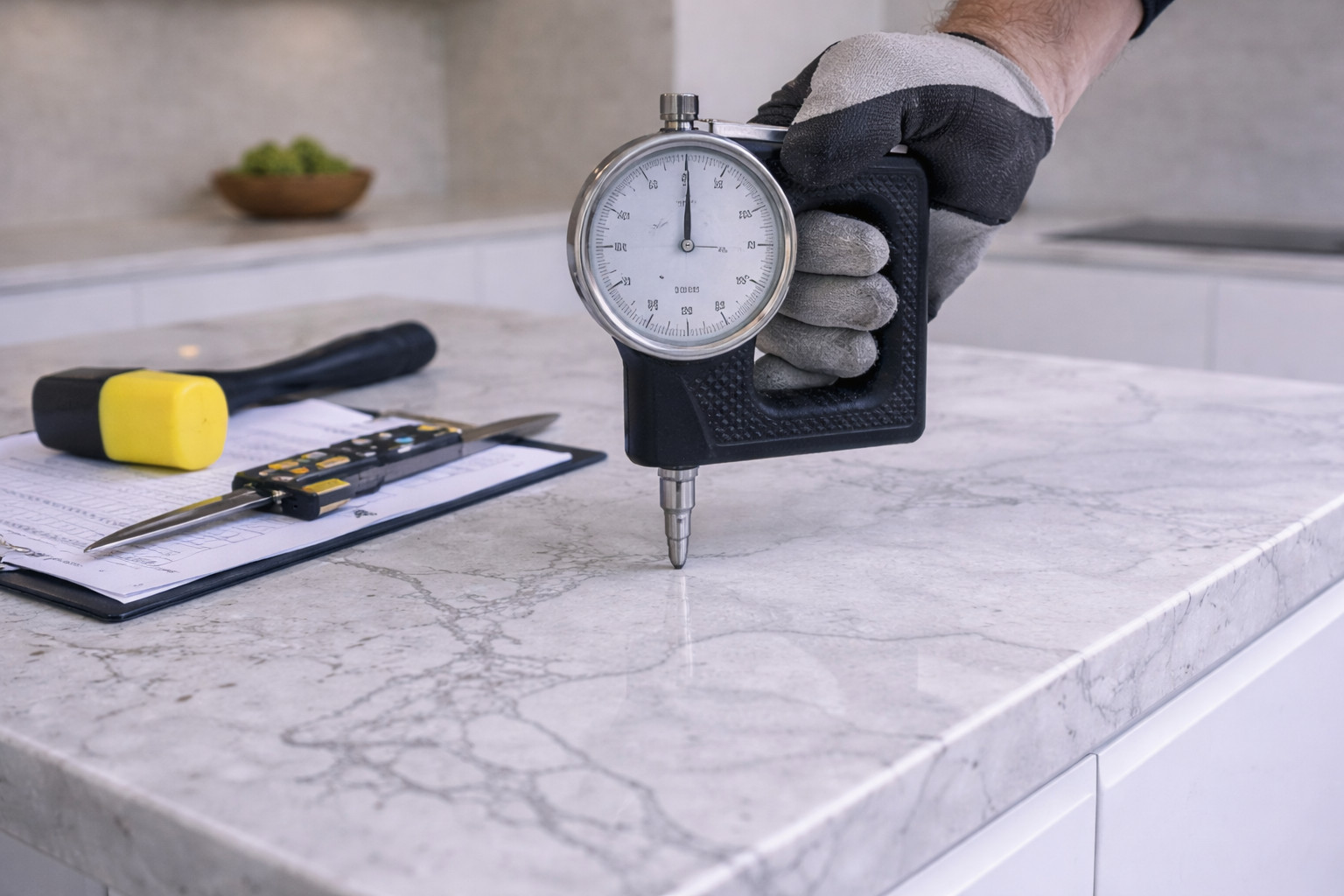
Choosing the right kitchen worktop material is not only about appearance. Kitchen Worktop Materials: Hardness and Impact Resistance Explained will help you understand why hardness and resistance to impact, scratches and daily wear are decisive factors, especially in busy family kitchens.
At MyKitchenWorktop, with more than 15 years of experience installing premium surfaces across London and the UK, each material is assessed not only for design appeal but also for its real mechanical performance. This guide analyses the main worktop materials — Terrazzo, Glass, Neolith, Limestone, Onyx, Dekton, Ceramics & Porcelain, Granite, Marble, Slate, Quartzite, Quartz and Travertine — focusing specifically on hardness and resistance.
If durability is a priority for your renovation, you can Request your quote and receive tailored advice for your project.
What Do Hardness and Resistance Really Mean in a Kitchen Worktop?
Before reviewing each material, it is important to clarify key technical concepts:
-
Surface hardness (Mohs scale) – resistance to scratching
-
Impact resistance – ability to withstand knocks without cracking
-
Abrasion resistance – performance under continuous use
-
Structural strength – ability to support weight without bending
-
Natural brittleness – tendency to chip or fracture
In everyday kitchen use, surface hardness and impact resistance are the most critical factors.
Material Analysis: Hardness and Resistance
Dekton Worktops
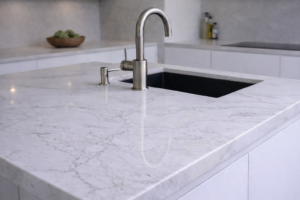
Type: Ultra-compact sintered surface
-
Mohs hardness: 7–8
-
Impact resistance: Very high
-
Scratch resistance: Excellent
-
Porosity: Zero
-
Edge brittleness (thin slabs): Moderate
Dekton worktops are among the most resistant kitchen surfaces available. They withstand heavy use, high temperatures and sharp objects with minimal risk of damage. For households requiring maximum durability, this material consistently performs at the highest level.
For high-performance kitchens, Request your quote to explore thickness and finish options.
Quartzite Worktops
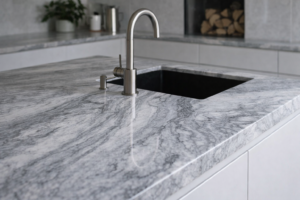
Type: Natural metamorphic stone
-
Mohs hardness: 7
-
Impact resistance: High
-
Scratch resistance: Very high
-
Structural strength: Excellent
Quartzite worktops combine natural beauty with exceptional durability. Unlike marble, quartzite resists scratching and tolerates moderate impact without structural compromise.
It is one of the hardest natural stones suitable for kitchens.
Granite Worktops
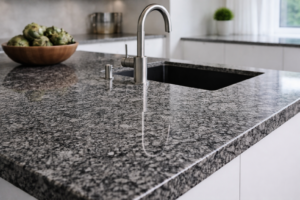
Type: Natural igneous stone
-
Mohs hardness: 6–7
-
Impact resistance: High
-
Scratch resistance: High
-
Porosity: Low (sealing recommended)
Granite worktops have long been regarded as a benchmark for strength. They handle everyday knocks and heavy cookware well, making them a reliable and durable option.
Quartz Worktops (Engineered Quartz)
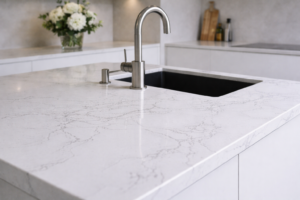
Type: Engineered stone (90–95% natural quartz)
-
Mohs hardness: 7
-
Impact resistance: Very high
-
Scratch resistance: Very high
-
Structural flexibility: Higher than natural stone
Quartz worktops combine mineral hardness with resin binders, which add flexibility and reduce the likelihood of cracking. This balance makes quartz one of the most practical and durable kitchen worktop materials.
Neolith and Ceramic & Porcelain Worktops
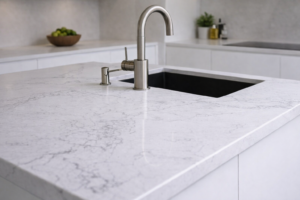
Type: Sintered ceramic surfaces
-
Mohs hardness: 6–7
-
Scratch resistance: Very high
-
Heat resistance: Excellent
-
Impact resistance: Moderate to high
Ceramic and porcelain worktops offer outstanding surface hardness and wear resistance. However, thinner slabs may be more vulnerable at exposed edges if struck directly.
They perform exceptionally well in terms of abrasion and daily use resistance.
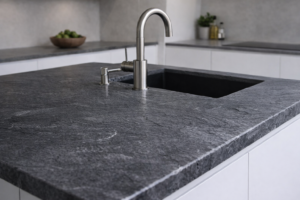
Slate Worktops
-
Mohs hardness: 3–4
-
Impact resistance: Moderate
-
Scratch resistance: Moderate
-
Structure: Layered
Slate worktops are softer than granite or quartzite. Their layered structure can make edges more prone to chipping if impacted.
Terrazzo Worktops
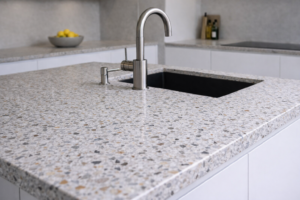
Type: Composite of aggregates and cement or resin
-
Hardness: Variable
-
Impact resistance: Moderate to high
-
Scratch resistance: Moderate
Modern terrazzo worktops vary depending on composition. Resin-based terrazzo tends to perform better than traditional cement versions but does not match the hardness of quartz or granite.
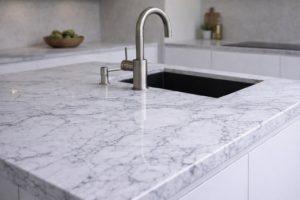
Marble Worktops
-
Mohs hardness: 3–5
-
Scratch resistance: Low to moderate
-
Impact resistance: Moderate
-
Relatively soft stone
Marble worktops are valued for elegance rather than durability. They scratch more easily and are more vulnerable to edge damage compared to harder stones.
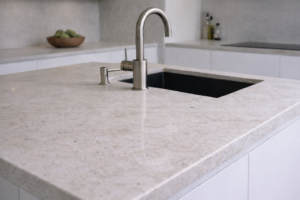
Limestone Worktops
-
Mohs hardness: 3–4
-
Impact resistance: Low to moderate
-
High porosity
-
Sensitive to scratches and knocks
Limestone worktops are softer and more porous, making them better suited to lighter-use kitchens.
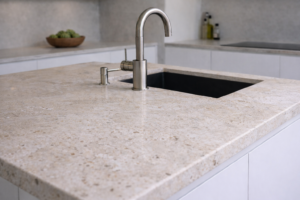
Travertine Worktops
-
Mohs hardness: 3
-
Impact resistance: Low
-
High porosity
-
Structurally softer material
Travertine worktops require sealing and careful maintenance. They are not recommended for high-impact environments.
Onyx Worktops
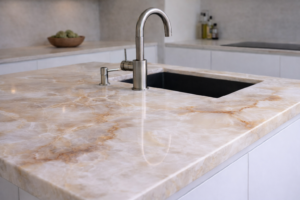
-
Mohs hardness: 6–7
-
Impact resistance: Low
-
Structurally brittle
Despite reasonable mineral hardness, onyx has a fragile crystalline structure. It is decorative rather than practical for heavy kitchen use.
Glass Worktops
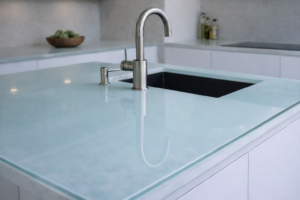
-
Surface hardness: High
-
Scratch resistance: Moderate to high
-
Impact resistance: Moderate
-
Structural brittleness: Present
Tempered glass worktops resist surface wear well, but concentrated impact may cause cracking or shattering.
Hardness and Resistance Comparison Table
Ratings out of 5 (5 = Excellent Performance)
| Material | Surface Hardness | Impact Resistance | Structural Strength | Wear Resistance | Overall Rating |
|---|---|---|---|---|---|
| Dekton Worktops | 5 | 5 | 5 | 5 | ★★★★★ |
| Quartzite Worktops | 5 | 4 | 5 | 5 | ★★★★★ |
| Quartz Worktops | 5 | 5 | 4 | 5 | ★★★★★ |
| Granite Worktops | 4 | 4 | 5 | 4 | ★★★★ |
| Neolith / Ceramic | 4 | 3 | 4 | 5 | ★★★★ |
| Terrazzo Worktops | 3 | 3 | 3 | 3 | ★★★ |
| Slate Worktops | 3 | 3 | 3 | 3 | ★★★ |
| Marble Worktops | 2 | 3 | 3 | 2 | ★★ |
| Limestone Worktops | 2 | 2 | 2 | 2 | ★★ |
| Travertine Worktops | 2 | 2 | 2 | 2 | ★★ |
| Onyx Worktops | 3 | 2 | 2 | 2 | ★★ |
| Glass Worktops | 3 | 3 | 2 | 3 | ★★ |
Which Is the Most Durable Kitchen Worktop Material?
If maximum hardness and impact resistance are the priority, the strongest performers are:
-
Dekton worktops
-
Quartz worktops
-
Quartzite worktops
-
Granite worktops
If aesthetics are prioritised over mechanical strength, softer natural stones such as marble, limestone or travertine may still be suitable in lower-impact kitchens.
At MyKitchenWorktop, each project is evaluated individually. The right choice depends on lifestyle, usage intensity, slab thickness and edge profile.
To ensure your kitchen combines style with long-term durability, Request your quote and receive expert technical guidance tailored to your home.
Final Considerations
Worktop resistance depends not only on material type but also on:
-
Thickness selection
-
Edge detailing
-
Installation quality
-
Structural support
Selecting the correct material from the outset prevents future repairs and ensures lasting performance.
For professional advice and a fully personalised quotation, Request your quote and begin your kitchen renovation with confidence.


