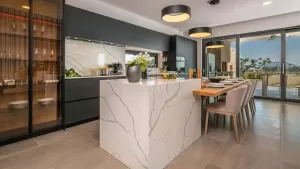



Viola kitchen worktops are becoming a distinctive choice for homeowners who want a luxury kitchen with more character. Instead of relying on plain white surfaces, this style introduces dramatic burgundy, wine, plum and soft rose veining across a pale background.
The result can feel refined, artistic and highly individual. However, the effect depends on choosing the right material, cabinet colour and layout. A Viola-inspired surface can become the centrepiece of a kitchen. Yet, it should not overwhelm the whole room.
At MyKitchenWorktop, the team helps homeowners choose statement surfaces that also work for everyday life. Whether the project needs porcelain, quartz or natural marble, the right design can balance bold veining with practical performance.
Request a cuote to discuss a Viola kitchen worktop, request samples and receive advice for a kitchen project in London, Surrey or elsewhere in the UK.
What Are Viola Kitchen Worktops?

Viola kitchen worktops take inspiration from expressive Calacatta-style marbles. They usually combine a light white, cream or ivory base with strong veins in burgundy, aubergine, brown, grey or dusty pink.
The word “Viola” often refers to the colour story rather than one single stone. Therefore, homeowners can achieve a similar appearance through several materials. Natural marble offers the most unique variation. Quartz can provide a more controlled pattern. Porcelain can deliver a dramatic marble effect with strong day-to-day practicality.
These worktops suit homeowners who want more than a neutral kitchen. They can add warmth to white cabinetry, depth to dark joinery and visual interest to simple layouts. In addition, they work particularly well on kitchen islands, full-height splashbacks and dining areas.
Every slab has its own movement. For this reason, MyKitchenWorktop recommends reviewing slab images or arranging a viewing before finalising a natural stone project. This ensures the veining suits the intended layout.
Why Burgundy-Veined Worktops Are Popular in Luxury Kitchens

Luxury kitchens are moving towards warmer and more expressive materials. Soft beige cabinetry, dark timber, brushed metal and textured stone now appear more often than stark white, all-grey schemes.
A Viola kitchen worktop fits this direction well. Its rich veining introduces colour without requiring brightly painted cabinets. It can make a simple kitchen feel designed rather than assembled.
In particular, burgundy veining works well because it feels warm and sophisticated. It can complement walnut, oak, smoked timber, cream lacquer, taupe cabinets and even deep green joinery. The stone brings contrast, while the surrounding materials keep the design grounded.
However, the best results come from restraint. A heavily veined surface already has presence. Therefore, the cabinetry, handles and lighting should support the worktop rather than compete with it.
Request a cuote and the MyKitchenWorktop team can help assess whether a Viola-style surface will suit the scale, light levels and layout of the kitchen.
Viola Marble, Quartz or Porcelain: Which Material Is Best?

The appearance may be similar, but marble, quartz and porcelain perform differently. The best option depends on how the kitchen will be used.
Natural marble for a completely unique surface
Natural marble offers depth, movement and variation that cannot be repeated exactly. A material such as Calacatta Vagli Rosato Marble combines a light background with rose tones and darker veining. It can create a genuinely bespoke result.
Marble works especially well in design-led kitchens, statement islands and projects where natural variation is part of the appeal. Nevertheless, it requires sensible care. Acidic liquids, strong cleaners and frequent spills should be managed quickly. A suitable sealant and proper maintenance can help protect the surface.
Quartz for a practical marble-inspired look
Quartz is often a strong choice for busy kitchens. It offers a more consistent appearance than natural stone and usually requires less routine care. The Compac Ice Viola Quartz Worktop is a good example of a marble-inspired surface with red and burgundy veining.
Quartz can suit family kitchens, rental properties and homes where low-maintenance living is important. However, hot pans should not be placed directly on the surface. Trivets remain a sensible precaution.
Porcelain for versatility and strong everyday performance
Porcelain surfaces are increasingly popular for full-height splashbacks, islands and modern kitchen worktops. They can offer a bold stone effect while being resistant to heat, stains and scratches under normal domestic use.
Xtone Viola Blue provides a striking alternative for homeowners who want the expressive look of Viola stone with the practical benefits of porcelain. Its graphic pattern works well in contemporary kitchens and can continue from the worktop into the splashback.
For many projects, porcelain is the most flexible material. It can suit thin worktop profiles, waterfall islands and large wall-cladding areas. It also works well where visual continuity matters.
How to Style Viola Kitchen Worktops

A Viola worktop can transform a kitchen. Still, the surrounding design choices determine whether it looks elegant or excessive.
Pair it with warm neutral cabinetry
Warm white, cream, mushroom, taupe and soft beige cabinetry can make burgundy veining feel calm and luxurious. These colours allow the stone to remain the main feature without creating too much contrast.
Matt finishes are often especially effective. They add softness and prevent the room from looking overly glossy. Light oak and walnut also work well, particularly in kitchens with natural daylight.
Use dark cabinets for a more dramatic look
For a stronger scheme, a Viola kitchen worktop can sit beautifully beside deep green, charcoal, black or dark brown cabinetry. This approach works best in larger kitchens or rooms with good lighting.
To maintain balance, the rest of the design should remain simple. Brushed brass, bronze or dark metal handles can complement the burgundy tones. Yet, too many contrasting finishes may make the space feel busy.
Choose a slim edge profile
Many Viola-inspired surfaces already have strong visual movement. A slim, clean edge profile often looks more contemporary than a heavily shaped detail. It allows the pattern to remain the focus.
For porcelain, a 12mm look can feel modern and architectural. Quartz and marble can also be fabricated with a mitred edge where a thicker appearance is preferred. The right choice depends on the kitchen style and the material selected.
Request a cuote to discuss thickness, edge profiles and the most suitable fabrication options for the chosen surface.
Should the Splashback Match the Worktop?

A matching splashback can create a high-end, continuous look. It is particularly effective when the worktop has a beautiful vein that can travel up the wall behind the hob or sink.
However, a full-height Viola splashback is not essential in every kitchen. In smaller rooms, using the material on both the worktop and every wall can feel overpowering. A more balanced approach may use the surface on the island and splashback, while keeping the perimeter worktops simpler.
Another option is to use the Viola material only as a focal point. For example, it can appear on the island and behind the hob, while plain porcelain or quartz covers the remaining worktops.
This approach creates luxury through contrast. It also allows homeowners to control the budget while keeping the most visible areas special.
Where Do Viola Kitchen Worktops Work Best?

Viola kitchen worktops are particularly effective in open-plan kitchens, large islands and spaces with generous natural light. They can also work well in smaller kitchens when used carefully.
In a compact kitchen, the surface may look best on one key area. A breakfast bar, waterfall end panel or short splashback can introduce character without making the room feel crowded.
In a larger kitchen, the material can be used more confidently. A bookmatched splashback, statement island or dining table in the same surface can create a strong architectural effect.
Every project should consider slab direction, joint positions and the most attractive part of the pattern. This is especially important with heavily veined materials. A thoughtful layout can make the final installation look far more expensive.
Are Viola Kitchen Worktops Easy to Maintain?
Maintenance depends on the material. Porcelain is generally the easiest option for everyday use. It resists heat and staining well, and it can be cleaned with mild household products.
Quartz is also straightforward to maintain. Daily cleaning with a soft cloth and mild detergent is normally enough. However, users should avoid harsh chemicals and direct heat.
Natural marble needs more attention. It should be cleaned promptly after spills, especially wine, lemon juice, vinegar and other acidic substances. Its natural ageing process can add character, but it may not suit homeowners who want a completely uniform surface forever.
The MyKitchenWorktop team can explain the practical differences before fabrication begins. This helps each homeowner choose a material that suits their cooking habits, household and expectations.
Why Choose MyKitchenWorktop for Viola Kitchen Worktops?
MyKitchenWorktop supplies and fabricates a wide range of marble, quartz and porcelain worktops for homes across London and the UK. The team can help compare materials, assess layouts and advise on splashbacks, upstands, edge details and installation.
A Viola kitchen worktop should not be chosen from a small sample alone. The slab pattern, kitchen dimensions and cabinet colours all affect the final result. Professional guidance can help ensure the finished kitchen feels balanced, practical and genuinely luxurious.
Whether the project calls for natural Calacatta-style marble, practical quartz or durable porcelain, the right surface can become the defining feature of the room.
Request a cuote today to discuss Viola kitchen worktops, request a sample or receive guidance for a bespoke kitchen surface.