

Kitchen worktops in the United Kingdom have undergone a remarkable transformation over the past century. The Evolution of Kitchen Worktops in the United Kingdom: From Early 20th-Century Functionality to Contemporary Luxury is a fascinating story that traces how what began as purely practical surfaces in industrial-era homes has evolved into highly engineered design features at the centre of open-plan living.
At MyKitchenWorktop, we examine how layout, shape, materials and fabrication techniques have developed over time, as well as how the role of the kitchen within the British home has changed. For those considering a renovation, understanding this evolution provides valuable context. And when the time comes to take action, simply Request your quote for tailored guidance.
1. Early 20th Century: Practicality and Basic Durability (1900–1945)


Layout and Form
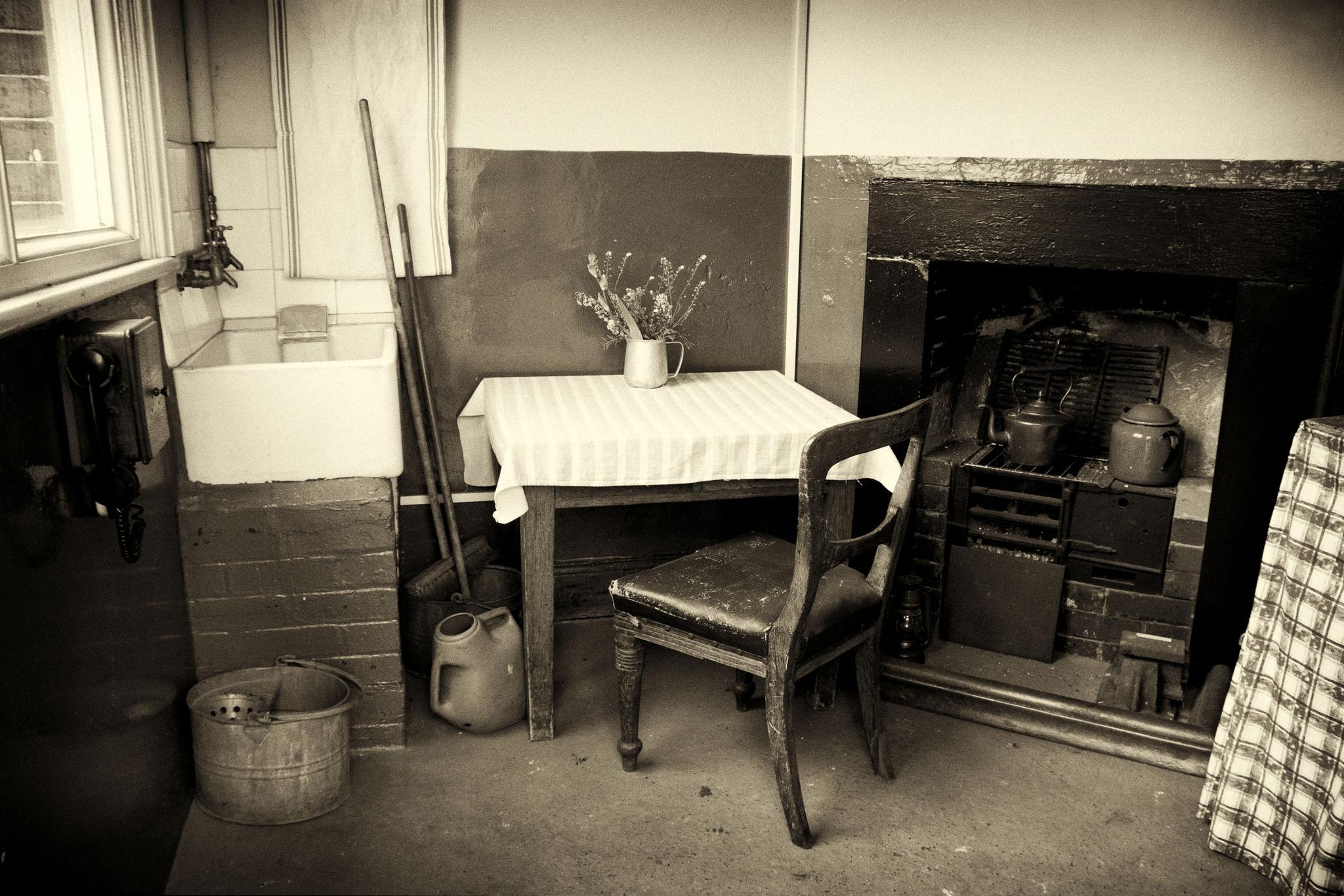
At the beginning of the 20th century, the British kitchen was typically a closed-off and highly functional space. Many homes included a separate scullery used for washing and heavy food preparation.
Worktops as we know them today did not yet exist as integrated elements. Instead, households relied on sturdy freestanding tables, enamelled metal surfaces or thick timber blocks supported by simple frames.
Predominant Materials
-
Solid timber
-
Enamelled steel
-
Zinc
-
Natural stone in higher-end homes
Durability mattered, but aesthetics were secondary.
Fabrication Techniques
Manufacturing was largely artisanal. Local carpenters crafted solid timber surfaces by hand, while metal components were produced using early industrial enamelling processes.
At this stage, the kitchen remained a purely utilitarian space. It was not yet considered the social heart of the home.
2. Post-War Modernisation: Laminates and Mass Production (1950–1970)


Layout and Design Evolution
Following the Second World War, the UK experienced significant housing expansion. Kitchens were designed for efficiency, often arranged in straight runs, L-shaped or galley configurations.
For the first time, worktops became fixed, integrated elements within fitted kitchen cabinetry.
Materials in Focus
-
Laminate surfaces (such as Formica)
-
Chipboard cores
-
Stainless steel
Laminate transformed the market due to its affordability, hygiene and ease of maintenance.
Fabrication Methods
Mass production enabled standardised modular units. Worktops were cut to general dimensions but offered limited customisation.
During this period, the kitchen began to shift towards a more family-oriented space, though it remained primarily functional.
3. 1980s and 1990s: Natural Materials and Greater Personalisation


Changes in Layout
U-shaped kitchens became common, and larger homes began incorporating early versions of the kitchen island. Informal dining areas within the kitchen grew in popularity.
The kitchen started opening towards adjacent living spaces.
Materials on the Rise
-
Treated solid wood
-
Early solid surface materials
Granite emerged as a symbol of quality and status, particularly in higher-value properties.
Advances in Fabrication
Mechanised cutting using diamond-tipped tools improved precision in natural stone fabrication. However, many finishing stages still required skilled manual craftsmanship.
At this point, the worktop transitioned from being merely practical to becoming a visual statement within the home.
For those seeking that balance between tradition and durability today, MyKitchenWorktop offers expert guidance. To begin a bespoke project, simply Request your quote.
4. The 21st Century: Engineered Precision and Open-Plan Living


Modern Layout and Spatial Integration
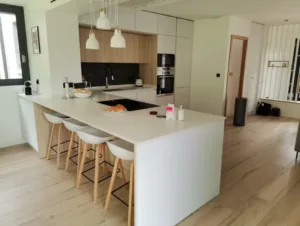
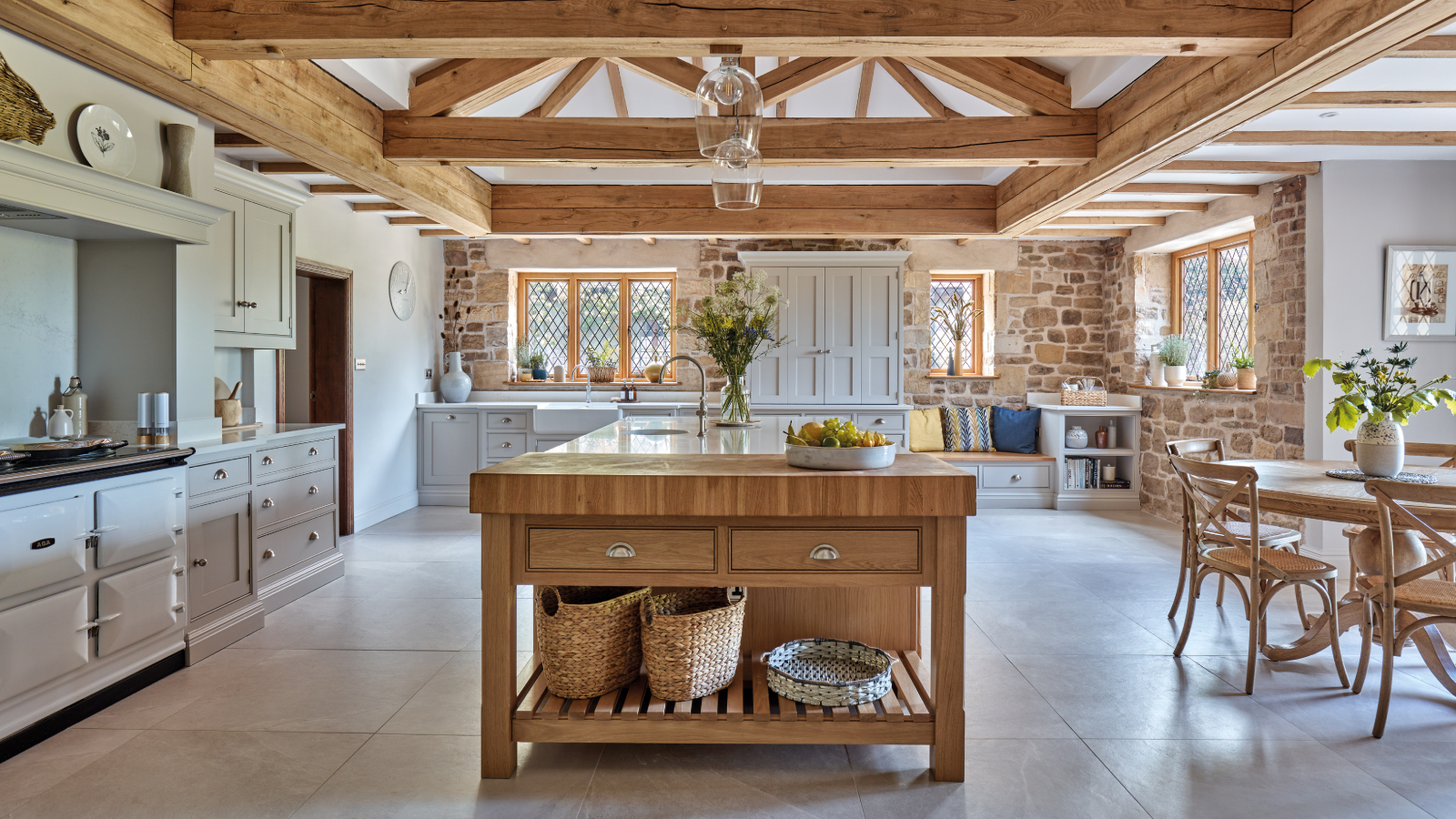
Open-plan kitchens now dominate contemporary UK design. The kitchen flows seamlessly into living and dining areas, and the island has become the central focal point.
Worktops now feature:
-
Waterfall ends
-
Customised thicknesses
-
Undermounted sinks
-
Seamless hob integration
-
Minimal joint lines
Contemporary Materials
Resistance to impact, heat and staining is now a primary consideration.
Modern Fabrication Techniques
Today’s kitchen worktops in the UK benefit from advanced technologies such as:
-
CNC precision cutting
-
Digital laser templating
-
Waterjet cutting for complex designs
-
Automated polishing systems
-
Bespoke edge profiling
Millimetre accuracy allows for seamless installations, even in technically complex environments.
5. The Kitchen as the Heart of the British Home
The technical evolution of worktops reflects broader social changes.
-
Then: a service area for domestic tasks
-
Now: the central hub of daily life
Today’s kitchen accommodates cooking, entertaining, remote working and social interaction. The worktop is no longer just a surface; it defines the visual identity and functionality of the space.
In premium properties, particularly in cities such as London, the choice of worktop often determines the overall aesthetic and perceived value of the kitchen.
Selecting the right material and design is therefore a strategic decision. At MyKitchenWorktop, each client receives expert guidance from concept through to installation. To begin transforming your space, Request your quote.
6. Current Trends and Future Outlook
Several clear trends shape today’s UK market:
-
Ultra-compact surfaces
-
Natural tones with pronounced veining
-
Minimalist design principles
-
Integrated technology
-
Sustainable production methods
Fabrication continues to evolve towards greater precision and environmental responsibility. Digital modelling reduces errors and optimises material efficiency.
Looking ahead, the future of kitchen worktops in the United Kingdom is likely to include:
-
Increased eco-conscious material innovation
-
Enhanced customisation
-
Greater technological integration
-
Multi-functional surface capabilities
Conclusion: A Century of Transformation
The evolution of kitchen worktops in the United Kingdom reflects profound changes in how homes are designed and experienced. From basic timber work surfaces to highly engineered natural stone and porcelain installations, each era has responded to the needs and aspirations of its time.
Today, a kitchen worktop is no longer just a practical element. It is the centrepiece of the modern home — combining performance, aesthetics and long-term value.
For those planning a renovation or a new kitchen installation, expert advice is essential. MyKitchenWorktop designs, supplies and installs premium kitchen worktops across the United Kingdom.
To transform your kitchen with precision-crafted, high-quality materials, the next step is straightforward: Request your quote and begin creating a space designed to endure.