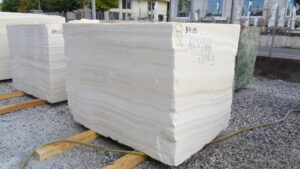



Natural quartzite worktops can bring bold veins and individual patterns to a kitchen. However, a trade name or a marble-like photo does not prove that a slab is quartzite. Confirm the stone type and care needs before choosing it for your project.
Our original 2018 article grouped five stone names under quartzite. Some linked product records use marble or granite labels, so the list below is a visual archive rather than a verified classification of every slab. Use it to explore colour and pattern, then ask for the details of the actual stone on offer.
What to check when buying natural quartzite worktops
First, ask the supplier to identify the stone and explain its expected performance. Then discuss the finish, sealing, cleaning and intended use. A broad promise that every quartzite-looking surface behaves like granite is not enough.
Also, review the slab itself. Natural patterns can vary greatly within one material name. A small sample may help with colour, but it cannot show every vein, patch or line across a large island.
1. San Simone: strong light and dark contrast
The archive describes San Simone as a pale stone with bold dark streaks. As a result, it can provide a strong focal point against simple cabinets. Compare the pattern at slab scale before planning joints.
However, appearance does not establish resistance to etching or staining. Ask about the exact slab and its care needs instead of assuming it will behave like another natural stone.

2. Copenhagen: a warm mixed palette
The original description of Copenhagen highlights cream, brown, gold and white tones. Therefore, it offers a useful reference when pairing a stone surface with warm timber or painted doors.
The linked record uses a marble label. Before ordering, clarify the material category with your supplier and check how the selected slab will respond to daily kitchen use.

3. Roma Imperiale: gold and ochre movement
Roma Imperiale appears in the archive with a pale base and gold-toned movement. For example, that pattern may work as a statement splashback or island. Keep nearby finishes simple if you want the stone to lead the design.
The product link uses a granite label, while the original article called it quartzite. Therefore, confirm the classification and technical details of the stone offered for your project.

4. Exuberant Brown: defined natural veining
The archive presents Exuberant Brown as a richly veined stone. Its long lines can guide the visual flow across a worktop. Also, review how those lines will meet at corners and joins.
Here too, the linked product record uses a marble label. Ask for clear care advice and suitability for the intended room. Do not assume that a kitchen, wet area and outdoor surface all share the same specification.

5. Belvedere: a dark base with dramatic veins
The original article describes Belvedere with a dark ground and lighter gold-toned veins. In contrast to the pale options above, it can anchor a light kitchen scheme.
Also, compare the available finish on the actual slab. A leathered or polished surface may show texture and reflected light differently. Confirm the current product details rather than relying on the archive’s origin or stock claims.

Care and sealing depend on the stone
Use the advice for your exact material and finish. The Natural Stone Institute’s care guidance explains why stone type matters when selecting cleaning products. Ask your supplier about sealing needs too.
As a daily habit, wipe up spills promptly and use boards and trivets. However, do not treat sealing as a promise that a surface cannot stain or etch. Ask how to deal with a mark before trying a strong cleaner.
Frequently asked questions
Are quartzite and engineered quartz the same?
No. Natural quartzite is a stone category, while engineered quartz is a manufactured surface. Their composition, pattern and care requirements differ.
Are all five archive names verified quartzites?
No. The original article and some product labels differ. Therefore, confirm the exact material offered rather than using this visual shortlist as a geological certificate.
Should I view the slab before approving a cutting plan?
Where possible, yes. Slab viewing helps you assess the full pattern and agree the most visible sections. Also, ask to review the proposed joint layout.
Build a shortlist with MKW
Explore natural quartzite worktops alongside granite worktops. Then share your plan, preferred pattern and care expectations with MKW. The team can help check the material and prepare a quote for your chosen slab.