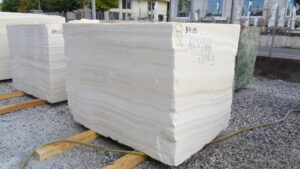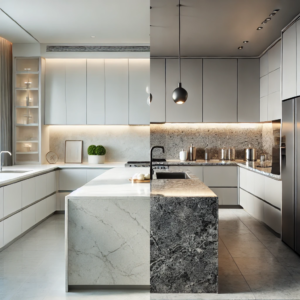



Natural stone worktop designs range from quiet white marble to richly patterned granite and blue quartzite. In particular, this archive presents 18 named stones that appeared in an earlier MKW collection. As a result, it helps readers compare their reported stone types, origins and visual character before viewing current samples.
However, natural stone varies from slab to slab. Therefore, photographs should guide the initial shortlist rather than serve as an exact colour reference. Moreover, availability, finish, thickness and classification can change, so MKW recommends checking a current physical sample or full slab before ordering.
How to compare natural stone worktop designs
First, consider how the kitchen will function. For example, granite and quartzite often suit busy preparation areas, although performance varies by stone. By contrast, marble offers distinctive veining but can etch when acids contact its surface. Meanwhile, travertine has open pores and usually needs attentive sealing and care.
Next, consider the colour and scale of the pattern. For instance, light stones can make a compact room feel more open, while dark or strongly veined slabs create a focal point. For an island, consider where major veins, colour changes and joins will sit. Subsequently, a fabricator can assess whether bookmatching or vein matching is practical.
For a broader comparison, readers can consult MKW’s guide to granite, quartz and marble worktops. Alternatively, the current worktop materials collection provides a wider starting point for an active project.
Light marble and quartzite worktop options
Aurora Fantasy marble
To begin, the archive lists Aurora Fantasy as an Indian marble. Nevertheless, buyers should judge the actual slab for colour balance, veining and variation rather than rely on its expressive commercial name.
Archive details: Marble; India.

Azul Macaubas quartzite
By comparison, Azul Macaubas adds a blue-led option to this group of natural stone worktop designs. Because bold linear movement can dominate a scheme, the slab layout deserves careful planning around islands and upstands.
Archive details: Quartzite; Brazil.


Bianco Carrara Extra marble
Meanwhile, Bianco Carrara Extra represents the familiar Italian white-and-grey marble aesthetic. Although it can complement traditional or contemporary cabinetry, owners must accept natural variation and the possibility of etching.
Archive details: Marble; Italy.

Bianco Neve marble
Similarly, the archive records Bianco Neve as an Italian marble. Therefore, compare it directly with other pale slabs because undertone, vein density and overall brightness can look different under kitchen lighting.
Archive details: Marble; Italy.

Blue, pink and strongly veined natural stone surfaces
Blue Calcite
For a statement feature, Blue Calcite offers an unusual decorative appearance. However, calcite-rich stones need careful assessment because acids may mark them. Consequently, suitability depends on the intended application and the characteristics of the specific slab.
Archive details: Calcite; Madagascar or Mexico.

Calacatta Bluette marble
Next, Calacatta Bluette appears in the archive as an Italian marble. Although its distinctive pattern can work well on an island, templates should account for the preferred direction and position of the veining.
Archive details: Marble; Italy.

Calacatta Vagli Rosatto marble
In contrast, this archive selection introduces warmer, rosier character among the pale marbles. Therefore, place cabinet, floor and paint samples beside the slab to check that subtle undertones remain harmonious.
Archive details: Marble; Italy.

Carrara Bella marble
Likewise, Carrara Bella provides another interpretation of Italian Carrara marble. Rather than choosing by name alone, compare full slabs for vein scale, background tone and natural features near planned cut-outs.
Archive details: Marble; Italy.

For help with narrowing a shortlist, clients can contact MKW to request a project quotation. During that discussion, MKW can check current material availability and relevant fabrication requirements.
Grey, striped and dark stone worktop designs
Emperador Silver marble
Within the grey group, Emperador Silver brings a cooler option to a family often associated with brown tones. Although it may pair well with timber or neutral cabinetry, the selected slab determines the final pattern.
Archive details: Marble; Spain.

Equator marble
Meanwhile, Equator appears here as a Turkish marble. Since its striped visual character can create direction across a worktop, seam placement and vein alignment require early consideration.
Archive details: Marble; Turkey.

Imperial White granite
By contrast, Imperial White adds a light granite choice to the archive. Although granite can be practical in kitchens, porosity and maintenance needs vary. Therefore, the fabricator should advise on sealing for the actual slab.
Archive details: Granite; India.

Nero Seta marble
At the darker end of the palette, Nero Seta offers strong contrast. However, dark surfaces may show dust, limescale or fingerprints more readily under direct light. Consequently, both the finish and daily cleaning habits matter.
Archive details: Marble; Italy.

Pale and high-movement natural stone worktop designs
Opal White marble
Returning to pale surfaces, Opal White appears in the source archive as Vietnamese marble. Although its light appearance could support a calm scheme, clients should inspect the slab for translucency, fissures and tonal variation.
Archive details: Marble; Vietnam.

Silver Wave marble
Next, the archive lists Silver Wave as a Greek marble. In particular, its flowing movement can become a key design feature across broad islands or wall panels. Accordingly, the cutting plan should preserve the most attractive areas.
Archive details: Marble; Greece.

Titanium travertine
Meanwhile, Titanium broadens these natural stone worktop designs with a darker travertine. Because travertine contains natural pores, a supplier may fill them during processing. Therefore, ask how the chosen finish affects cleaning and long-term maintenance.
Archive details: Travertine; Iran.

Travertine Bianco
Alternatively, Travertine Bianco provides a lighter option. Although its texture can suit decorative applications, the project team should assess it carefully for demanding preparation areas. In addition, the team should specify suitable sealing and care.
Archive details: Travertine; Italy.

Statement granite and white quartzite
White Patagonia granite
For dramatic natural movement, White Patagonia stands out within the archive. Although the archive classifies it as Brazilian granite, trade names and geological labels sometimes differ. Therefore, a current supplier should confirm the description for the chosen slab.
Archive details: Granite; Brazil.

White quartzite
Finally, the last archive entry uses a broad descriptive name rather than a specific variety. In general, white quartzite can offer crystalline depth and natural veining. However, clients should verify composition and performance because some commercially labelled materials may behave differently.
Archive details: Quartzite; USA or Canada.

Care and specification for natural stone worktop designs
For routine care, use a soft cloth, warm water and a cleaner suitable for the confirmed stone. In addition, wipe spills promptly. However, do not assume that one routine suits every natural surface, particularly when a shortlist includes marble, calcite and travertine.
Before fabrication, review sink and hob cut-outs, tap holes, drainage grooves, edges, upstands and seams. Also, discuss support for large overhangs and heavy sections. For further context, MKW explains the typical stages on its worktop process page.
Ultimately, a professional template and installation help translate the chosen slab into a coherent finished surface. Therefore, clients who wish to compare current options can request a tailored quotation from MKW, subject to material checks and project requirements.
Frequently asked questions
Are all of these archive stones currently available?
Not necessarily. Since this article preserves an earlier collection, names and supply may have changed. Therefore, MKW should confirm current availability before a client bases a design on any listed material.
Which natural stone is best for a busy kitchen?
No single stone suits every household. For example, granite and some quartzites may provide robust options, while marble and calcite need greater care around acids. Accordingly, clients should assess the specific slab, finish and intended use.
Does every slab look like the photograph?
No. Instead, every natural stone slab varies in colour, veins, mineral markings and pattern. Therefore, viewing the actual slab remains the most reliable way to approve its appearance.
Do natural stone worktops need sealing?
Many do, but the requirement and schedule depend on the stone and finish. Consequently, clients should follow care guidance from the supplier or fabricator for the installed material rather than rely on a universal timetable.
Can strongly veined stone run across an island?
Often, yes, subject to slab dimensions, structural requirements and the fabrication plan. However, early layout approval helps position major veins and determine whether seams or bookmatching will suit the design.