

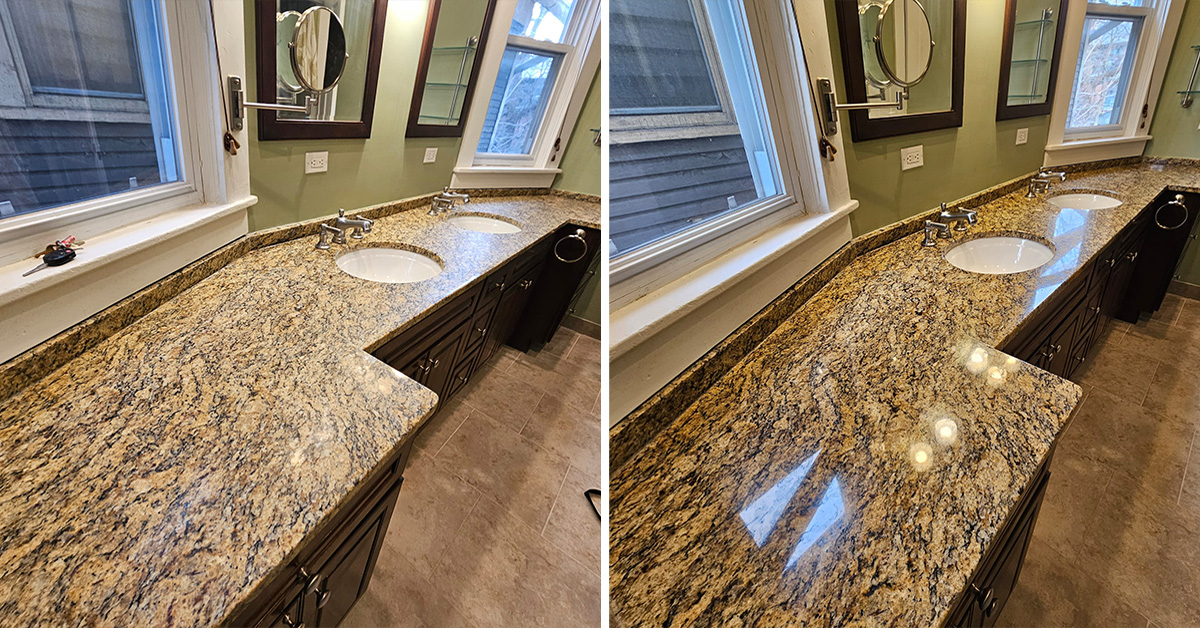
Not every kitchen worktop needs to be replaced to look its best again. In many cases, polishing, sanding and sealing a kitchen worktop can renew its appearance without changing the color, especially when the surface itself is still structurally sound, made from a high-quality material, but has simply lost its original finish over time. Daily use, cleaning products, heat and general wear can gradually dull the surface, leaving it tired rather than truly damaged.
For homeowners who are happy with the colour and material of their worktop, polishing, sanding and sealing offer an effective way to restore its appearance without altering its character. From the perspective of the MyKitchenWorktop team, this approach is often the most sensible, sustainable and cost-effective solution—particularly for natural stone worktops.
And when restoration is no longer enough, the next step is always clear: request a quote for a brand-new, long-lasting surface.
What Does Polishing, Sanding and Sealing Actually Mean?
Although often mentioned together, these three processes serve different purposes and are usually combined to achieve the best result.
-
Sanding removes surface imperfections such as scratches, etching or dull patches.
-
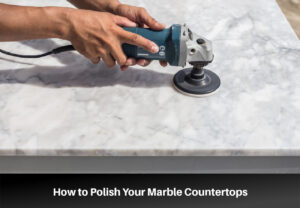
Polishing restores smoothness and enhances the natural finish of the stone.
-
Sealing protects the surface against stains, moisture and daily wear.
The goal is simple: to make the worktop look refreshed and well cared for, without changing its colour or design.
Which Worktops Are Suitable for This Type of Renewal?
This method is particularly effective for natural stone worktops, where the beauty of the material lies beneath the surface layer.
✅ Ideal materials
Polishing, sanding and sealing work best on:
-
Granite worktops
-
Limestone
-
Travertine
-
Quartzite
These materials are designed to last for decades and can often be restored multiple times during their lifespan.
❌ Less suitable surfaces
This approach is not recommended for:
-
Laminate worktops
-
Painted or vinyl-wrapped surfaces
-
Heavily damaged engineered materials
In those cases, replacement or alternative renovation methods may be more appropriate. If you are unsure, the safest option is to request a quote and receive professional advice based on your specific worktop.
Why Worktops Lose Their Original Finish
Even the highest-quality stone will show signs of wear over time. Common causes include:
-
Acidic spills (lemon juice, vinegar, wine)
-
Abrasive cleaning products
-
Heavy use in busy family kitchens
-
Heat exposure
-
Micro-scratches from daily tasks
These issues rarely affect the strength of the stone but can significantly impact how it looks.
The Sanding Process: Correcting Surface Imperfections
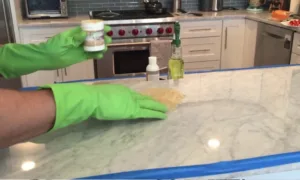
Sanding is the first technical step in restoring a worktop. Using progressively finer abrasives, the surface is gently levelled to remove:
-
Scratches
-
Etching marks
-
Dull or uneven areas
-
Minor chips or wear marks
This process does not alter the colour of the stone. Instead, it reveals a fresh layer of material beneath the worn surface.
Proper sanding requires experience and precision. Over-sanding or uneven pressure can create flat spots or inconsistent finishes, which is why this stage is best handled by professionals.
Polishing: Bringing the Stone Back to Life
Once the surface is smooth, polishing restores the desired finish.
Depending on the kitchen style and material, this may be:
-
High gloss
-
Satin
-
Honed (matt)
Polishing enhances the stone’s natural depth and texture, allowing the original colour and veining to re-emerge. For many homeowners, this is the stage where the transformation becomes truly noticeable.
At this point, the worktop often looks significantly younger—sometimes by many years.

Sealing: Essential Protection for Long-Term Results
Sealing is the final and most important step for durability. Natural stone is porous to varying degrees, meaning it can absorb liquids if left unprotected.
A high-quality sealant:
-
Reduces staining
-
Improves resistance to moisture
-
Makes daily cleaning easier
-
Preserves the restored finish
Sealers are available in different formulations, including natural-look and enhanced finishes. The correct choice depends on the stone type and the desired appearance.
A professionally sealed worktop will retain its renewed look far longer than an unsealed surface.
Benefits of Polishing, Sanding and Sealing
This renovation method offers several clear advantages:
-
No colour or design change
-
Maintains the original character of the kitchen
-
Lower cost than full replacement
-
Minimal disruption
-
Sustainable and environmentally responsible
-
Ideal for premium stone surfaces
For many kitchens, this approach delivers the perfect balance between refresh and preservation. And if, in the future, a complete transformation is desired, you can always request a quote for a new worktop installation.
Limitations to Be Aware Of
While highly effective, this solution is not suitable in every situation.
Polishing and sealing will not:
-
Fix structural cracks
-
Correct major installation faults
-
Change outdated colours or styles
-
Make low-quality materials perform like premium stone
It is best seen as a way to restore beauty, not to redesign the kitchen.
Maintenance After Restoration
To maintain the renewed finish:
-
Use pH-neutral cleaning products
-
Avoid abrasive sponges
-
Clean spills promptly
-
Reseal periodically, depending on use
With proper care, a restored stone worktop can remain in excellent condition for many years.
When Restoration Is the Smartest Choice
Polishing, sanding and sealing are ideal when:
-
The stone is high quality
-
The colour and style still suit the kitchen
-
Wear is mainly cosmetic
-
Sustainability is a priority
In these cases, restoration often provides the best return on investment.
When Replacement Becomes the Better Option
Replacement may be preferable when:
-
The worktop is heavily damaged
-
The design no longer fits the space
-
A full kitchen renovation is planned
-
A different material or colour is desired
At that point, the most effective next step is to request a quote and explore modern, durable worktop options tailored to your kitchen.
A Timeless Solution for Quality Worktops
At MyKitchenWorktop, polishing, sanding and sealing are seen as an intelligent way to respect quality materials. When a stone worktop still has good bones, restoring it often makes far more sense than replacing it prematurely.
And when the time eventually comes for a new surface, expert guidance ensures that the next worktop is chosen to last just as long.
👉 Request a quote and let the team help you decide whether restoration or replacement is the right solution for your kitchen.