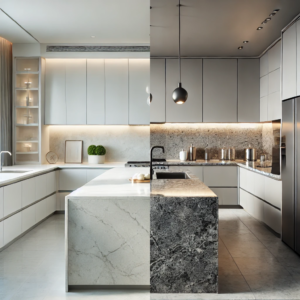



White marble vs granite vs quartz is primarily a choice between natural character, practical performance and predictable design. Marble offers distinctive veining and a cool surface; however, common acids can etch it. Granite provides durable natural stone with unique mineral patterns, while engineered quartz combines consistent colours with straightforward routine care.
Consequently, no single material suits every household. The right choice depends on the desired appearance, tolerance for natural variation, cleaning habits and intended use. This guide compares white marble worktops with granite worktops and engineered quartz without presenting one option as universally best.
In particular, marble worktops suit buyers who value natural veining and accept a developing patina. By contrast, white quartz worktops provide more controlled colours and patterns. Meanwhile, white granite worktops combine geological variation with robust everyday performance.
White marble vs granite vs quartz at a glance
| Consideration | White marble | White granite | White quartz |
|---|---|---|---|
| Material type | Natural metamorphic stone | Natural igneous stone | Engineered surface containing minerals, binders and pigments |
| Appearance | Natural veining and tonal variation | Mineral grains, flecks or flowing movement | More controlled patterns and colours |
| Porosity | Porous | Varies between stones | Generally non-porous |
| Acid sensitivity | Acids can cause etching | Usually less vulnerable than marble | Usually resists everyday food acids, subject to product guidance |
| Routine care | Prompt wiping and a stone-safe cleaner | Suitable cleaning and sealing where required | Simple cleaning and normally no sealing |
| Pattern consistency | Every slab differs | Every slab differs | Usually more consistent, although patterns can vary |
However, this table offers broad comparisons rather than guarantees. Individual stones, finishes and quartz products can perform differently. Therefore, buyers should inspect the chosen slab or a representative sample and follow the relevant supplier’s care guidance.
What is a white marble worktop?
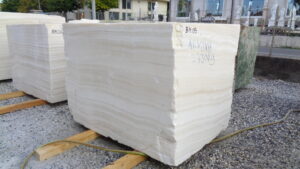
Marble develops when heat and pressure transform limestone over a very long period. As a result, the stone often displays flowing veins, tonal movement and visual depth. Well-known varieties also commonly take their names from their source, including Carrara in Italy.
Moreover, white marble can complement traditional kitchens, restrained contemporary interiors and pastry preparation areas. Each slab has individual markings, so buyers should view the actual stone whenever practical.
Marble’s practical strengths and limitations
Marble provides an attractive natural surface and remains cool to the touch. Nevertheless, it is softer than granite and reacts with acids. Lemon juice, vinegar and unsuitable cleaning products can leave dull marks known as etching.
Sealer can reduce liquid absorption; however, it cannot prevent acid etching or guarantee complete stain protection. Therefore, owners should wipe spills promptly, use chopping boards and choose a cleaner suitable for natural stone.
Over time, marble may develop a patina through normal use. Some households value that lived-in character, whereas others prefer a surface that changes less visibly. Buyers should consider this distinction before they choose marble solely for its initial appearance.
For further advice, MKW’s Carrara marble care guide explains useful everyday precautions.
How does white granite compare?
Granite forms when molten material cools slowly beneath the Earth’s surface. It contains interlocking minerals, commonly including quartz and feldspar. Consequently, white granite rarely looks completely plain; grey, black, beige or coloured mineral details often run through it.
Unlike manufactured patterns, each granite slab displays its own combination of grains, veins and movement. Therefore, slab viewing matters, especially when a design includes a large island, visible joints or several matching sections.
Granite durability and maintenance
Granite generally resists scratches and everyday wear well. However, absorption rates vary between stones, so some slabs need periodic sealing while others require less intervention. Buyers should ask the fabricator or supplier about the selected stone rather than follow a universal sealing schedule.
In addition, granite usually tolerates heat better than engineered quartz. Even so, trivets provide sensible protection because they reduce the risk of thermal shock and help preserve the finish. Similarly, chopping boards protect the worktop and prevent knives from losing their edge.
Overall, granite suits buyers who want genuine geological variation and strong everyday performance. MKW’s guide to granite worktops for kitchens offers further information.
How does engineered quartz differ?
Quartz itself occurs naturally as a mineral. However, the term “quartz worktop” normally describes an engineered slab that combines mineral content with binders and pigments. Because manufacturers use different formulations, buyers should consult the relevant technical information for exact composition and performance.
Engineered quartz can provide a clean white background, subtle flecks or marble-inspired veining. Therefore, it appeals to households that want a pale surface with more predictable patterning than natural stone. Moreover, the broad range of designs can support both traditional and contemporary interiors.
Quartz care and limitations
Quartz surfaces generally offer low porosity and normally need no sealing. Consequently, owners can manage routine cleaning with a soft cloth and an appropriate cleaner. Nevertheless, low maintenance does not mean indestructible.
Hot cookware can damage resin-based surfaces, so users should always place pans on a trivet. Furthermore, strong chemicals and abrasive pads may alter the finish. Product suitability for strong sunlight or outdoor use can also vary; therefore, buyers should check the manufacturer’s guidance before specifying an application.
MKW explains heat precautions in its guide to placing hot pans on quartz worktops. In addition, buyers can explore different visual approaches in this overview of quartz worktop colours.
Which white worktop is best for a kitchen?
The decision becomes easier when a household ranks its priorities:
- Choose marble for authentic veining, natural depth and a surface that can develop a patina. However, allow for careful spill management and protection from acids.
- Choose granite for natural variation and robust everyday performance. Meanwhile, check the chosen slab’s sealing needs and inspect its pattern before fabrication.
- Choose quartz for controlled design, straightforward cleaning and normally no sealing. Nevertheless, protect the surface from direct heat and follow product-specific guidance.
Lighting, cabinets and room size also influence the final effect. For example, a cool white worktop may appear different beneath warm artificial lighting, while strong veining can dominate a compact room. Therefore, buyers should view samples beside the cabinet doors, flooring and splashback in the intended space whenever possible.
Edge profiles, joints, sink cut-outs and upstands also shape the finished design. Consequently, a professional template should account for walls, appliances and cabinet dimensions. MKW staff can then discuss suitable materials and prepare a project-specific quotation after reviewing the requirements.
Installation and long-term care
All three materials need correctly supported cabinets and accurate fabrication. Natural slabs can contain tonal shifts, fissures and mineral features that contribute to the stone’s individual character. By contrast, engineered designs offer greater visual control, although installers must still consider pattern placement around joints and cut-outs.
Before ordering, customers should confirm the sink type, tap holes, hob cut-out, edge profile and splashback requirements. Additionally, the project team should assess access routes because large fabricated sections can prove heavy and difficult to manoeuvre.
Daily care remains manageable when owners follow suitable habits. First, they should wipe spills promptly rather than leave them overnight. Next, they should avoid cutting directly on the surface. Finally, they should use trivets beneath hot cookware and follow the supplier’s cleaning guidance.
Customers who still need to compare wider material categories can consult MKW’s guide to choosing kitchen worktops.
Frequently asked questions
Does white marble stain more easily than granite or quartz?
Marble can absorb spills because it has a porous structure. Although a suitable sealer may reduce absorption, acids can still etch the surface. Granite porosity varies, whereas engineered quartz generally offers low porosity.
Does granite always need sealing?
No single rule applies to every granite. Some stones absorb more liquid than others, while the finish can also affect care requirements. Therefore, the supplier or fabricator should advise on the selected slab.
Can white quartz look like marble?
Yes. Many engineered quartz designs use veining to create a marble-inspired appearance. However, they do not reproduce the exact visual depth and random variation of natural marble. This comparison of Carrara marble and Carrara-style quartz explores the distinction further.
Which material needs the least routine maintenance?
Engineered quartz usually requires the least routine intervention because it generally needs no sealing. Even so, owners should use suitable cleaners, chopping boards and protection from hot cookware.
What should buyers inspect before ordering?
For marble and granite, buyers should inspect the actual slab where practical and review its colour, veins and planned joint positions. For quartz, they should check a representative sample and confirm the product’s care, heat and application guidance.
Making the final comparison
In summary, white marble vs granite vs quartz involves more than comparing hardness. Marble prioritises natural beauty and character, granite combines geological variation with robust performance, and quartz provides controlled design with straightforward care.
Ultimately, the best result comes from matching those qualities to everyday habits and the wider kitchen scheme. MKW staff can help customers compare suitable samples, fabrication details and maintenance expectations before preparing a tailored quotation.
Granite Worktops and quartz worktops both provide practical alternatives to marble; however, every project needs an individual assessment. Material choice, slab or pattern selection, templating and installation should work together to produce a successful result.
Originally published by Jesus Alberto Mouzo on 29 November 2018.